China's Tech Sector Reacts to Jensen Huang Scandal
The Jensen Huang scandal has sparked a complex reaction in China's tech sector, highlighting tensions between government-driven self-reliance and private enterprise's reliance on foreign technology.

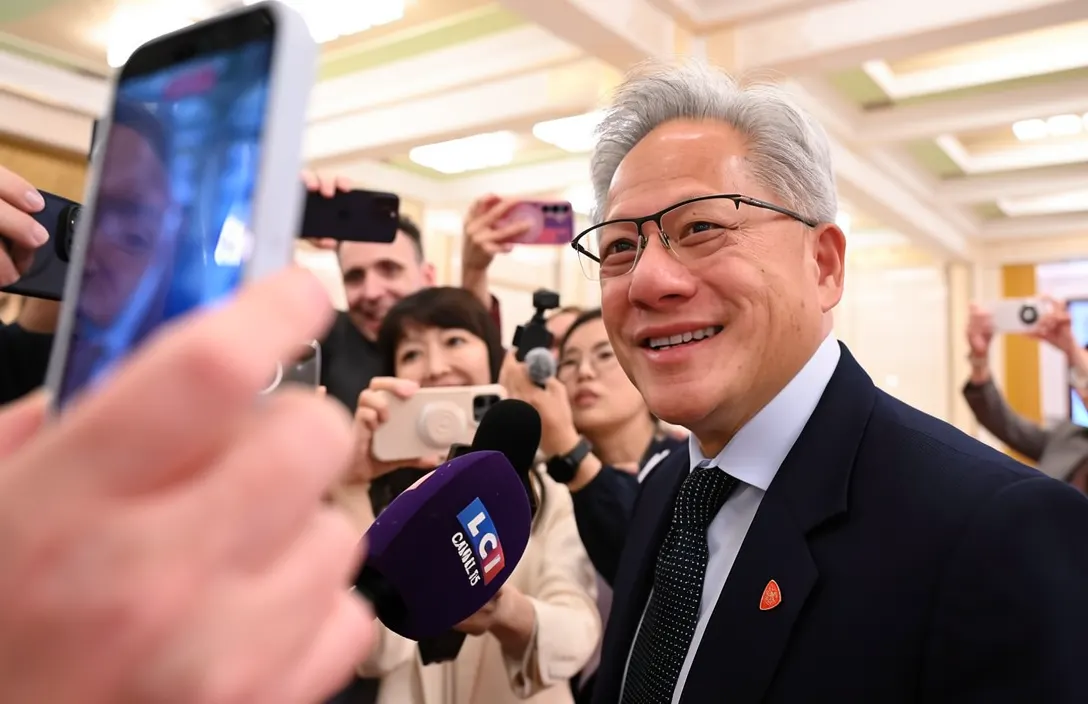
The scandal involving Nvidia CEO Jensen Huang and Alice Huang has sparked a cultural phenomenon in China, with knockoffs of the pink dress Alice Huang wore in photos with the Nvidia CEO selling rapidly on Taobao (opens in new tab), and the Shanghai restaurant where the two were spotted turning the dishes they ordered into a special set meal (opens in new tab). This incident has also drawn attention to the tension between China's government-driven planned economy and its private sector, as highlighted by The San Francisco Standard (source ID 1). The affair has become a focal point for discussions about the country's economic and technological strategies. [1]
Beijing has refused to buy Nvidia chips, a move that private investors see as an opportunity for massive state investment in semiconductors. They argue that the longer China relies on Nvidia, the longer it will take for a Chinese company like Huawei to build chips that can rival Nvidia's. This perspective is supported by the evidence provided by The San Francisco Standard (source ID 1), which notes that the ouster of Jensen Huang as Nvidia's CEO has been interpreted differently by various stakeholders in China. [1]
On the other hand, Chinese tech companies like Alibaba, which owns Taobao, rely on Nvidia's chips to run their AI systems. These companies often acquire Nvidia's chips through data centers outside China or through smuggling networks. The San Francisco Standard (source ID 1) highlights that many tech founders and CEOs in China feel a sense of despair, as the Jensen Huang scandal has made them question their ability to access American markets, capital, and technology. [1]
The Chinese government's stance on semiconductors has been shaped by a desire for self-sufficiency, even if it means incurring significant costs. This is evident in the government's refusal to approve the purchase of Pfizer vaccines during the COVID-19 pandemic, as noted by The San Francisco Standard (source ID 1). The government's focus on eliminating chokeholds contrasts with the priorities of private companies, which are more concerned with reducing costs and having the best chips available. [1]
Advertisement
The scandal involving Nvidia CEO Jensen Huang and Alice Huang has sparked a cultural phenomenon in China, with knockoffs of the pink dress Alice Huang wore in photos with the Nvidia CEO selling rapidly on Taobao (opens in new tab), and the Shanghai restaurant where the two were spotted turning the dishes they ordered into a special set meal (opens in new tab) (Source ID: 1). This viral event has highlighted the growing influence of pop culture in China, where consumers are eager to emulate the 'Alice Huang look' (or 黄乐同款) as a symbol of glamour and status. The incident has also drawn attention to the complex relationship between the government and private enterprises in the tech sector, as both sides navigate the consequences of the scandal. [1]
On one hand, Beijing has refused to buy Nvidia chips, a move that private investors see as an opportunity for massive state investment in semiconductors (Source ID: 1). This decision aligns with the Chinese government's broader goal of achieving self-reliance in critical technologies. However, this stance contrasts with the needs of Chinese tech companies like Alibaba, which rely on Nvidia's chips to run their AI systems (Source ID: 1). The tension between these two perspectives has become more pronounced in light of the Jensen Huang scandal, which has raised questions about the future of U.S.-China tech collaboration and the risks faced by Chinese companies operating in the global market. [1]
The Chinese government's refusal to purchase Nvidia chips has been interpreted as a strategic move to accelerate domestic semiconductor development, even if it comes at a cost (Source ID: 1). This approach mirrors the government's stance during the COVID-19 pandemic, when it prioritized self-sufficiency in vaccine production despite international offers. While Chinese companies may prefer the best available technology, the government's focus remains on reducing dependence on foreign suppliers, a goal that has been reinforced by the Jensen Huang affair (Source ID: 1). This divergence in priorities underscores the challenges faced by China's tech sector as it balances the demands of the state with the needs of its private enterprises. [1]
The scandal involving Nvidia CEO Jensen Huang and Alice Huang has sparked a cultural phenomenon in China, with knockoffs of the pink dress Alice Huang wore in photos with the Nvidia CEO selling rapidly on Taobao (opens in new tab), and the Shanghai restaurant where the two were spotted turning the dishes they ordered into a special set meal (opens in new tab) (Source ID: 1). The viral nature of the incident has led to a surge in consumer interest, with many seeking to emulate the 'Alice Huang look' (or 黄乐同款) as a symbol of glamour and influence. This cultural impact highlights the deep integration of celebrity and consumer behavior in China’s digital marketplace. [1]
Advertisement
On one hand, Beijing has refused to buy Nvidia chips, a move that private investors see as an opportunity for massive state investment in semiconductors (Source ID: 1). This decision aligns with the Chinese government's broader strategy of promoting self-reliance in critical technologies. The government has long emphasized the need to develop its own semiconductor industry to reduce dependence on foreign suppliers, a goal that has gained urgency in light of recent geopolitical tensions and the Nvidia scandal. [1]
On the other hand, Chinese tech companies like Alibaba, which owns Taobao, rely on Nvidia's chips to run their AI systems (Source ID: 1). These companies depend on high-performance computing hardware to maintain their competitive edge in the global AI market. The reliance on Nvidia chips underscores the tension between the government's push for self-sufficiency and the private sector's need for cutting-edge technology to drive innovation and growth. [1]
Sources
Prepared with AI assistance from the cited sources.
The Cali Reporter newsletter
The stories worth your time.
California, the country, and what comes next. Join our free newsletter for reporting that keeps you informed.
More in San Francisco
- United Airlines Offers Flight Change Waivers Ahead of Storm at SFO
United Airlines has announced a waiver of flight-change fees for passengers affected by an incoming storm and potential flooding at San Francisco International Airport.
- Brandon Aiyuk Released by 49ers, Likely to Become Free Agent
The San Francisco 49ers have released wide receiver Brandon Aiyuk, who is expected to become a free agent after filing for reinstatement and passing a physical.
- Nvidia CEO Reinstated Amid National Security Concerns
Nvidia's board reinstated Jensen Huang as CEO following intervention from President Donald Trump, amid ongoing investigations into potential export control violations and national security risks.