Chesky’s $100 Million Parks Gift Anchors a More Settled San Francisco Role
The Airbnb chief’s pledge, Presidio Heights purchase, expanded offices and reported AI venture deepen his local ties, while the scope of his civic role remains uncertain.
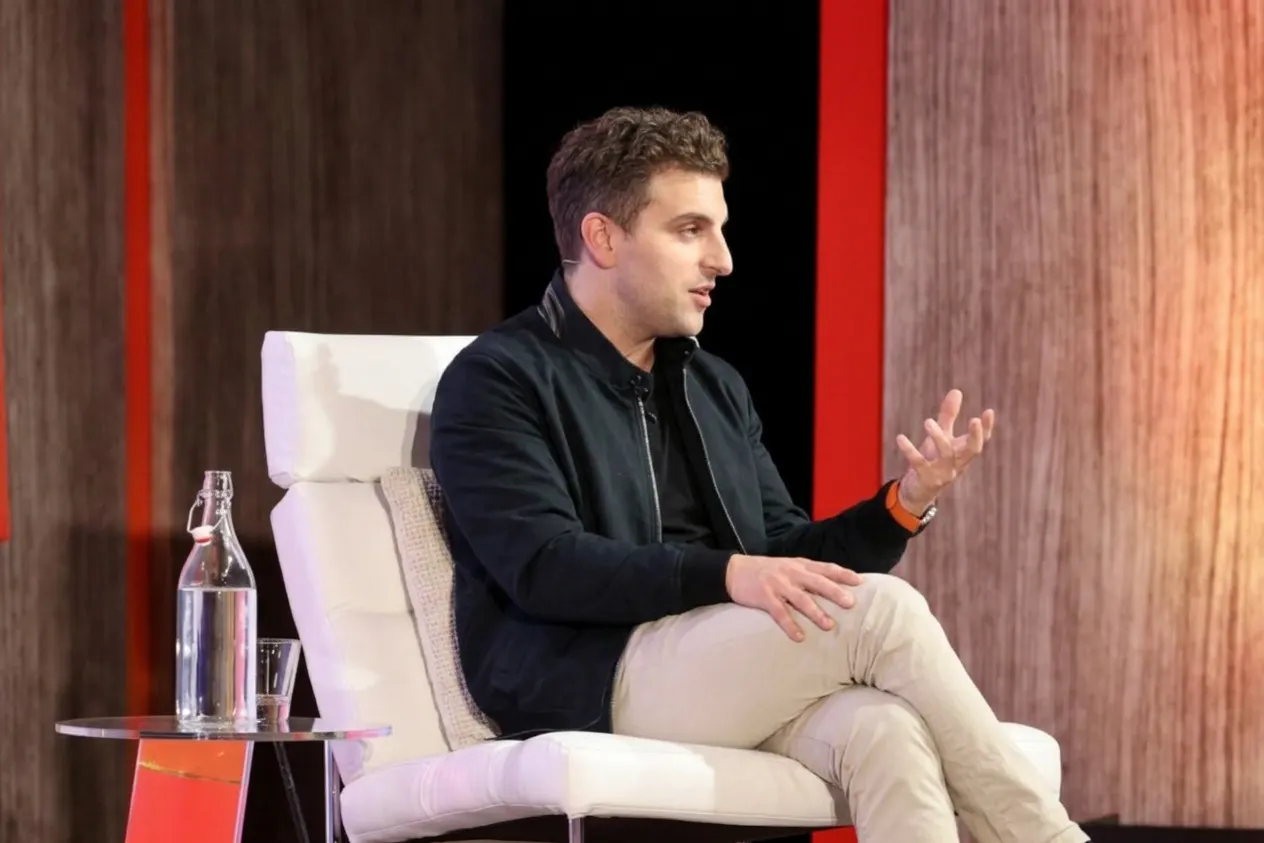
Brian Chesky, Airbnb’s chief executive, has committed $100 million of his own money to restoring San Francisco’s parks, The San Francisco Standard reported. The Standard described it as the largest single donation the city has ever received. The pledge is divided into an initial $39 million for finishing park projects in South of Market, Bayview, the Mission, Potrero Hill and the Embarcadero, plus $61 million for park work that has not yet been selected. Mayor Daniel Lurie called the gift groundbreaking and used the announcement to urge other wealthy San Franciscans to become participants in the city’s recovery rather than spectators. [1]
The parks commitment is one of several recent developments tying Chesky more closely to San Francisco. During the summer, he bought a Presidio Heights property made up of two connected mansions that had belonged to Metallica drummer Lars Ulrich. The Standard identified Chesky as the buyer through a source familiar with the transaction and public records connecting him to the property. The price was $68 million, described by the Standard as the year’s biggest sale involving combined homes. Before Ulrich, the property was owned by Salesforce chief executive Marc Benioff. The Standard reported that neighbors include venture capitalist and White House adviser David Sacks and former YouTube games head David Geffon. The identification of Chesky as the buyer rests on the Standard’s source and public records, not on a statement from Chesky himself. [1]
The purchase marks a change from Chesky’s earlier pattern. For years, the Standard reported, he was a part-time San Franciscan: he owned a home in Dolores Heights while spending time in Airbnb properties around the world and encouraging employees to adopt a work-from-anywhere lifestyle. He also once spent a year moving among Airbnb rentals in different cities. Now, the Standard said, the head of a company built around global travel seems to be settling down in San Francisco. The Standard suggested that the same attraction drawing many other technology workers—starting an AI company—may help explain the shift. [1]
Airbnb’s local office strategy has also shifted. After the pandemic, the company gave up roughly 400,000 square feet of San Francisco office space as it adopted a work-from-anywhere approach. More recently, it renewed its headquarters lease in the Design District through 2037 and took an additional 100,000 square feet in the nearby Takahashi Building, the Standard reported, citing The Chronicle. The Standard presented the moves as a reversal of the company’s earlier retreat from the city. The expanded footprint gives Chesky’s civic and business activity a more permanent physical presence in San Francisco at a time when his public profile there is rising. [1]
Advertisement
Chesky is also reported to be building an artificial-intelligence company in the city. According to The Information, as relayed by the Standard, he has worked for about a year on a secretive venture using the placeholder name Kaboodle Labs. Chesky confirmed the company’s existence on a podcast in August. California Secretary of State records place its principal location at a building in South Beach, the Standard reported. The report says Chesky is financing the operation himself and that Airbnb has obtained the ability to invest in the company and to use its technology later. Chesky declined to comment to the Standard, leaving many specifics about the venture undisclosed. [1]
The donation also arrives as Airbnb works to repair a strained relationship with San Francisco. In 2024, the company sued the city, alleging that it had been overcharged by $120 million in business taxes. The case settled in March without San Francisco having to return any of the taxes, the Standard reported. A few months later, Airbnb gave $1.2 million to refurbish soccer pitches in San Francisco, Los Angeles and Oakland ahead of the World Cup. Chesky appeared with Lurie to announce that donation, according to the Standard. The sequence suggests a more cooperative public posture after a period of conflict. [1]
Chesky is an early member of the Partnership for San Francisco, an organization created by allies of Lurie in 2025 to encourage conversation between business leaders and city government, the Standard reported. He is among nearly 40 executives—a group that includes Sam Altman and Garry Tan—who meet with the mayor every quarter to discuss housing, transportation and policing. Katherine August-deWilde, the group’s president and chief executive, called Chesky an important thought leader, according to the Standard. She said his experience and views are valuable and that his concern for San Francisco matters to the organization. The group gives Chesky a structured, if advisory, role in civic affairs. [1]
The parks gift has prompted speculation about whether Chesky might assume a larger philanthropic role in San Francisco. Benioff has been a significant city benefactor but moved to Hawaii after the pandemic. Venture capitalist and philanthropist Ron Conway announced this year that he was reducing some of his usual activities after a cancer diagnosis. Against that backdrop, some wondered whether Chesky could take on part of the role other local donors have played. The Standard, however, noted that his political giving has not been extensive. It cited a maximum contribution to Gavin Newsom’s 2015 gubernatorial campaign and a $200,000 gift to Hillary Clinton’s 2016 presidential run. [1]
Advertisement
Chesky’s philanthropy before this week was described by the Standard as modest and conducted largely through Airbnb.org. He and Airbnb cofounders Joe Gebbia and Nathan Blecharczyk have signed the Giving Pledge, committing to give away most of their wealth. Before the parks pledge, his largest personal philanthropic gift was $100 million to the Obama Foundation, according to the Standard. That donation provided money and travel grants to students preparing for public-service careers. The record therefore shows both substantial capacity for giving and, until now, a relatively limited pattern of personal civic philanthropy in San Francisco. [1]
A former City Hall official offered the Standard a cautious assessment of the founders’ political engagement. The official said the Airbnb founders have seldom taken part in city politics except when issues affected their business, pointing to the 2014 fight over a tax on short-term rentals. Even so, the official added that Chesky could potentially do more than that. The comment captures the uncertainty surrounding his current moves: they may signal a broader civic role, but the supplied record does not establish that they amount to a sustained political or philanthropic program. [1]
Chesky’s own remarks suggest interest in a larger civic role but do not promise a long-term one, according to the Standard. In an interview with The Chronicle about the donation, he said he would like to be more involved in San Francisco. He described the gift as a first step and said he wanted to learn from it. He also said that what he learned would probably guide what he does next. Those comments present the donation as an opening move and a learning process rather than as a completed plan. The first $39 million is directed toward completing park projects in the named neighborhoods, while the other $61 million is reserved for projects that have not been chosen. [1]
The public-role questions are not fully answered by the donation or by Chesky’s membership in the Partnership for San Francisco. The Standard’s account shows a business leader increasing his local real estate, office space and charitable giving while joining a mayor-linked advisory group. It also shows a history of limited political donations and philanthropy that had mostly run through Airbnb.org. Whether the parks gift marks a lasting shift in his civic engagement or a one-time intervention is not settled by the evidence. The former City Hall official’s comment—that Chesky has potential to do more—leaves that possibility open without confirming it. [1]
Advertisement
Several questions remain unanswered in the supplied material. The Standard does not say how the remaining $61 million for parks will be allocated or on what timeline. It also does not explain what Kaboodle Labs is building, how large the operation is or precisely how Airbnb’s option to invest and use its technology would be exercised. Chesky’s comment that he wants to learn from the first step and let that guide his next actions raises a further question: what form any later civic involvement might take. These are open questions, not predictions. [1]
The record also leaves unclear how Chesky’s expanded local presence will translate into ongoing civic or business activity. The Standard reports the headquarters lease through 2037 and the additional Takahashi Building space but does not describe hiring plans or occupancy. It reports Chesky’s early membership in the Partnership for San Francisco but does not say whether his role will grow beyond the quarterly meetings described. And it reports speculation that he might take on a larger philanthropic role without establishing that he will. The answers will depend on decisions and disclosures not contained in the current evidence. [1]
What can be said is that the parks pledge, the Presidio Heights purchase, Airbnb’s renewed office commitment and the reported AI company together give Chesky a more visible and more fixed San Francisco presence than the part-time, work-from-anywhere pattern described by the Standard. The donation is the most concrete civic act in the record, and its first $39 million is assigned to named neighborhoods. The rest—the remaining parks money, the AI venture’s purpose, the durability of Chesky’s public role—remains unresolved and should be treated as questions rather than conclusions. [1]
Sources
Prepared with AI assistance from the cited sources.
The Cali Reporter newsletter
The stories worth your time.
California, the country, and what comes next. Join our free newsletter for reporting that keeps you informed.
More in San Francisco
- Documentary Explores the Discovery of Lesbian Seagulls and Its Impact on LGBTQ+ History
A new documentary, 'Love Birds,' delves into the scientific discovery of lesbian seagull pairs in the 1970s and its broader implications for LGBTQ+ history and representation in nature films.
- Lower Haight Parklet Removal Sparks Community Division
The removal of a community-built parklet in the Lower Haight neighborhood of San Francisco has ignited debate among residents, raising questions about public safety, neighborhood management, and the challenges of…
- Bayview Black Women Family Homes in San Francisco
The San Francisco Standard reports on the challenges and significance of Black families maintaining their homes in the Bayview neighborhood, highlighting the stories of Cyn Babalola, Jeanette Wright, and others who are…