

Study Finds Dogs and Cats Prefer This 'Fungus' Protein Over Chicken (And It Has a Smaller Environmental Footprint)
A new test shows pets love the fermentation alternative but the taste is just as important as the nutrition.

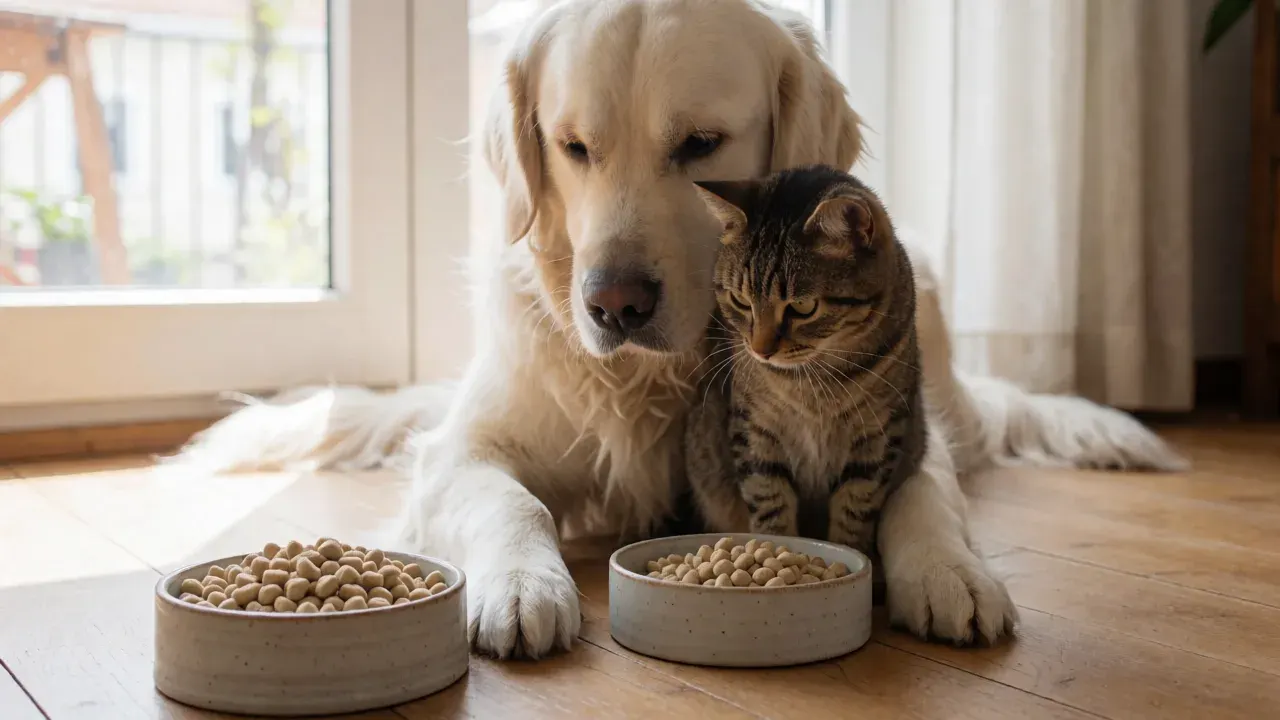
Let’s be honest. Feeding a pet is a commitment that can drain your wallet and your curiosity. We all want the best for our dogs and cats, but the ingredients list on a standard bag of kibble often reads like a chemistry experiment. Fish and poultry have long been the undisputed kings of the pet food world. They are easy to understand and generally accepted as the standard. However, what happens when we challenge that status quo? A recent study suggests that the future of pet food might involve a surprising ingredient that sounds more like a science experiment than a dinner option. The results were surprising to say the least. According to research led by Ally Motta de Matos and A.L.B. Cruz, cats and dogs might actually prefer a protein source derived from fermentation over their traditional fish and poultry meals. This isn't just a guess. It is the result of a rigorous two-bowl feeding study. The researchers from MicroHarvest, a European company pioneering this technology, wanted to see if a new way of making protein could actually win a taste test against the conventional stuff. The stakes are higher than you might think. As the global population grows, so does the demand for meat. This puts a massive strain on our agricultural resources. Fish and poultry production requires significant amounts of land and water while generating considerable greenhouse gas emissions. Finding alternatives is not just a trend. It is a necessity for sustainability. Microbial protein offers a compelling solution. It is made through the fermentation of fungi, yeast, and bacteria. This process is cheaper on the planet and requires far less agricultural space. The nutritional profile is impressive too, often matching or beating traditional sources in amino acid density. However, good nutrition is useless if the animal won’t eat it. The study tackled this specific problem head-on. The researchers conducted a two-bowl preference test involving thirty dogs and thirty cats. The setup was designed to eliminate bias. Owners fed their pets two bowls at once during four meals over two days. One bowl contained a standard formula designed to mimic a commercial fish and rice diet. The other bowl had an identical formula, except the fish meal was replaced by microbial protein and the poultry meal was partially replaced. Poultry fat was added to balance the fat content. The most critical part of the test was the blind element. The bowl position was switched at every meal to rule out side bias. Everything was coded so owners had no idea which bowl was which. The results were definitive. Dogs ate about 72 percent of the microbial protein kibble compared to just 50 percent of the standard version. Cats showed a similar pattern, eating 51 percent of the microbial kibble against 34 percent of the control. This isn’t a slow acceptance. Both species tended to go for the microbial-protein bowl first and ate from it first more often. This is a strong signal of preference. Even though fish meal is considered a palatability favorite, the pets opted for the new option. An independent lab examined the nutritional and chemical makeup of both diets to understand why. They found the diets were broadly similar in crude fat and overall composition. However, the microbial protein diet contained noticeably more tryptophan, an amino acid linked to serotonin production. It also had a lower omega-6-to-omega-3 ratio, which is generally considered a nutritional plus. This combination of taste and nutrition makes a strong case for the new ingredient. The study, published in the journal PLOS One, provides an encouraging starting point. Longer studies are needed to see how palatability and health hold up over time and across different life stages. Still, the data is clear. For any new pet food ingredient, taste matters just as much as nutrition. A perfectly balanced formula doesn't mean much if animals simply won't eat it. "Acceptance by the animal is an essential consideration when evaluating new ingredients for pet food," the authors noted. Ultimately, the food needs to be something dogs and cats choose to eat. This study proves that the solution for a sustainable planet might also be the solution for a happy pet bowl.
First reported by Earth.com.
More in Health & Nutrition
- Long-term opioid use fails to alleviate chronic back pain, Northwestern University study suggests
Researchers identified distinct brain activity patterns and molecular markers that may guide future treatments for pain management and opioid tapering.
- Human tau seeds trigger disease-specific shapes in mouse brains, new study finds
Study in Nature shows that injectable human tau aggregates from Alzheimer’s and corticobasal degeneration template their 3D folds onto mouse tau, supporting the prion-like seeding model.
- Menopause Largely Missing from Electronic Health Records Despite Its Health Impact
study of nearly 240,000 women finds only 12% of electronic records include menopause status, even though over half reported being in transition.