Canada and China Agree to Expand Tariff Relief
Canada and China have announced new tariff reductions and exemptions as part of an ongoing effort to strengthen trade relations and reduce economic dependence on the United States.

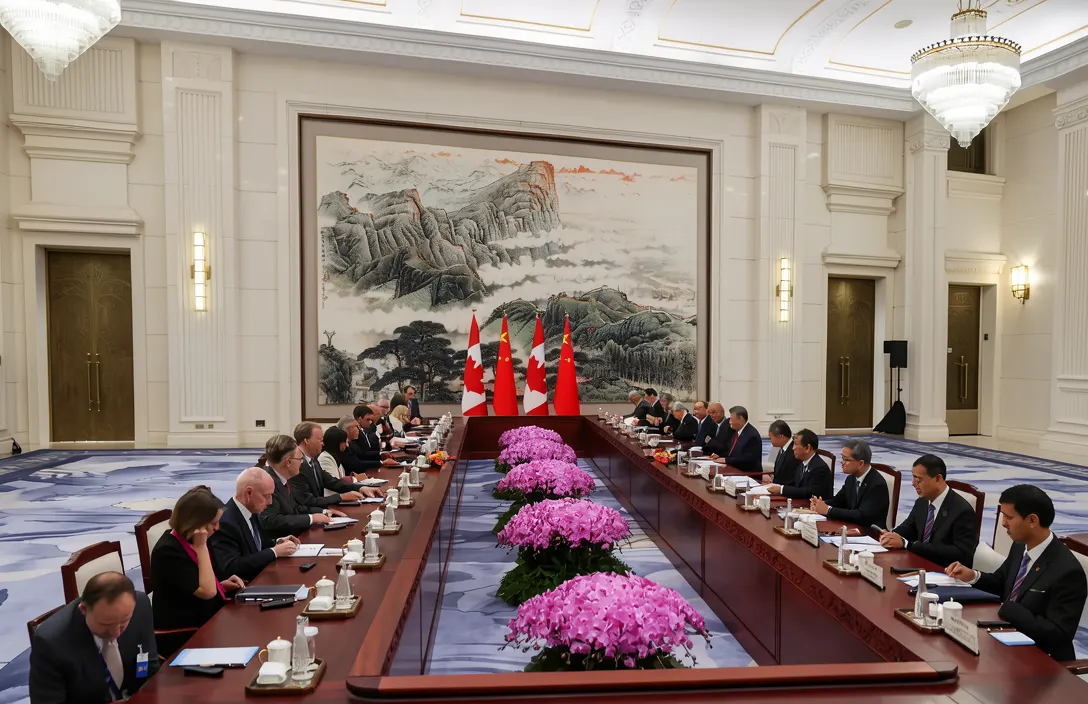

China has offered tariff cuts on Canadian pork and seafood, while Canada has extended exemptions for Chinese steel and aluminium, according to a statement from Canadian Prime Minister Mark Carney's office. This agreement was announced during a meeting between Carney and Chinese President Xi Jinping on the sidelines of the Asia-Pacific Economic Cooperation (APEC) summit in Shenzhen. The deal builds on an earlier agreement made in January to improve trade and diplomatic relations between the two countries (source ID 1). [1]
China will provide tariff relief on approximately 400 million Canadian dollars ($280 million) worth of Canadian exports, including frozen pork and seafood. In return, Canada will maintain tariff exemptions for certain Chinese steel and aluminium products for an additional two years and extend remissions to another 32 steel and aluminium items. Xi Jinping stated that stronger ties between China and Canada serve both countries' interests and support global stability and prosperity (source ID 1). [1]
Under the January agreement, Canada reduced its 100 percent tariff on Chinese electric vehicles to 6.1 percent, allowing an initial 49,000 vehicles into the country each year. This cap is expected to rise to 70,000 over five years. In return, China agreed to lower tariffs on Canadian agricultural products and recently extended relief for canola meal, peas, lobster, and crab for another two years (source ID 1). [1]
China has offered tariff cuts on Canadian pork and seafood, while Canada has extended exemptions for Chinese steel and aluminium, according to a statement from Canadian Prime Minister Mark Carney's office. China will provide tariff relief on approximately 400 million Canadian dollars ($280 million) worth of Canadian exports, including frozen pork and seafood. This agreement was announced during a meeting between Carney and Chinese President Xi Jinping on the sidelines of the Asia-Pacific Economic Cooperation (APEC) summit in Shenzhen (1). [1]
Advertisement
In exchange, Canada will keep tariff exemptions for certain Chinese steel and aluminium products in place for another two years, and add remissions to another 32 steel and aluminium items that Canada doesn’t have enough of. This move is part of a broader effort to improve trade relations and reduce Canada’s dependence on the United States amid ongoing trade tensions (1). [1]
Under the January agreement, Canada lowered its 100 percent tariff on Chinese electric vehicles to 6.1 percent, allowing an initial 49,000 vehicles into the country each year. That cap is set to rise to 70,000 over five years. In return, China agreed to lower tariffs on Canadian agricultural products and recently extended relief for canola meal, peas, lobster and crab for another two years (1). [1]
China has offered tariff cuts on Canadian pork and seafood, while Canada has extended exemptions for Chinese steel and aluminium, according to a statement from Canadian Prime Minister Mark Carney's office. This agreement was announced during a meeting between Carney and Chinese President Xi Jinping on the sidelines of the Asia-Pacific Economic Cooperation (APEC) summit in Shenzhen. The move aims to strengthen trade ties and reduce Canada's reliance on the United States amid ongoing trade tensions with President Donald Trump (Source ID: 1). [1]
China will provide tariff relief on approximately 400 million Canadian dollars ($280 million) worth of Canadian exports, including frozen pork and seafood. In exchange, Canada will keep tariff exemptions for certain Chinese steel and aluminium products in place for another two years, and add remissions to another 32 steel and aluminium items that Canada doesn’t have enough of. This reciprocal arrangement reflects a broader effort to stabilize and expand trade between the two countries (Source ID: 1). [1]
Advertisement
Under the January agreement, Canada lowered its 100 percent tariff on Chinese electric vehicles to 6.1 percent, allowing an initial 49,000 vehicles into the country each year. That cap is set to rise to 70,000 over five years. In return, China agreed to lower tariffs on Canadian agricultural products and recently extended relief for canola meal, peas, lobster and crab for another two years (Source ID: 1). [1]
Sources
Prepared with AI assistance from the cited sources.
The Cali Reporter newsletter
The stories worth your time.
California, the country, and what comes next. Join our free newsletter for reporting that keeps you informed.
More in World
- Irish Man Charged with Destroying U.S. Military Aircraft at Shannon Airport
A man from Ireland has been indicted for allegedly destroying a U.S. military aircraft at Shannon Airport, according to prosecutors in New York.
- Trump's APEC Summit and Strategic Meetings
President Donald Trump is set to attend the APEC summit in Shenzhen, China, where he is expected to meet with Chinese President Xi Jinping and participate in a trilateral meeting with Russian President Vladimir Putin,…
- Early Snowfall in Northern England and Scotland
Snowfall occurred in parts of Northern England and southern Scotland, with subsequent melting due to milder temperatures, according to the BBC.