

Can VR and Classical Music Actually Lower Your Blood Pressure? The Study Says Yes
Researchers found a natural way to calm patients down and drop numbers in the ER

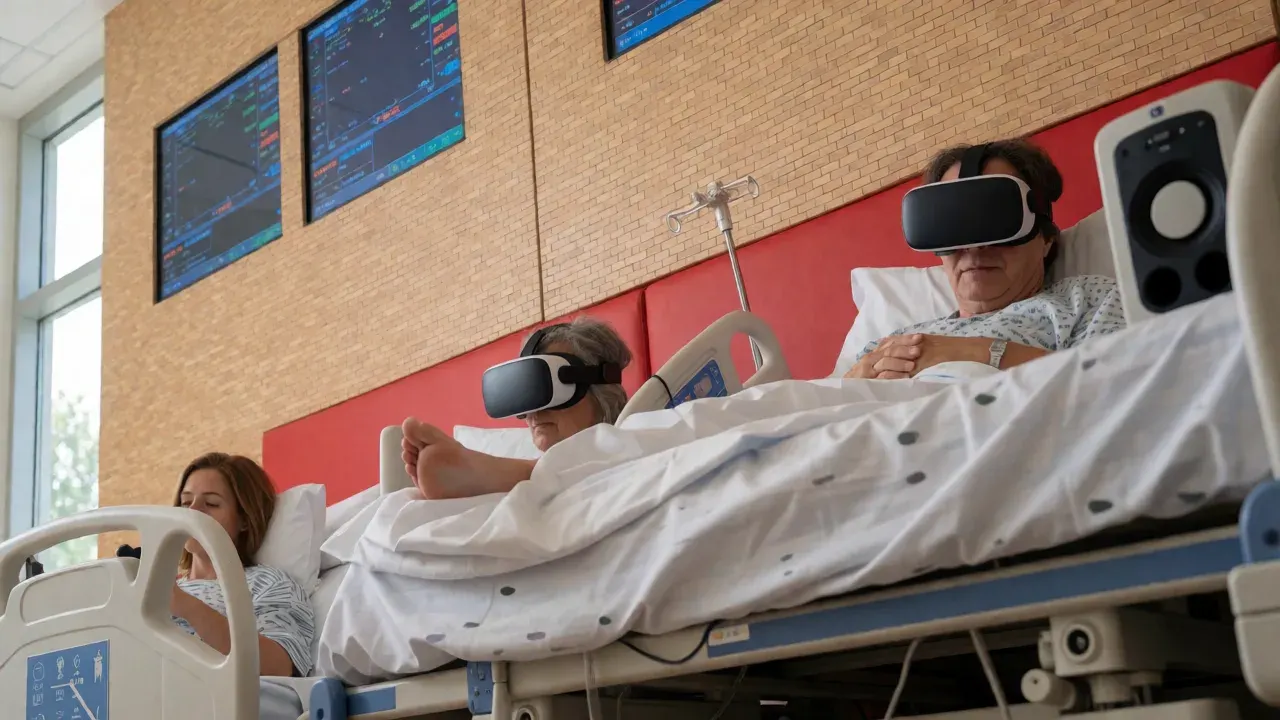
Walking into an emergency department when your blood pressure is spiking is not a fun experience. The fluorescent lights are always too bright, the noise is a cacophony of beeping machines and hushed conversations, and the waiting room is filled with people who are clearly not okay. For patients with hypertensive urgency, these are not just minor annoyances. In fact, they are major contributors to the problem. When your body is already stressed, the environment can make those readings climb even higher. But a recent study from Turkey suggests that a combination of technology and old-school comfort might be exactly what the doctor ordered to get things under control.
The research, presented at the European Emergency Medicine Congress, looked at 130 adult patients who arrived at emergency departments with significantly elevated blood pressure. This condition, known as hypertensive urgency, presents with readings of 180 mmHg or higher on the top number, or 110 mmHg or higher on the bottom number, though usually without immediate damage to organs. The lead researcher, Dr. Safa Dönmez, an associate professor at the University of Health Sciences in Ankara, noticed a pattern. While he treated the blood pressure with medication, the patients were often visibly anxious and frightened. Dr. Dönmez explained that anxiety causes the body to release stress hormones which tighten blood vessels and push pressure even higher. The emergency environment itself seemed to be working against the treatment plan.
Dr. Dönmez and his colleague Dr. Kadir Yenal, an emergency medicine specialist at Ankara Bilkent City Hospital, decided to test a hypothesis. Could calming the patient down actually help treat them medically? They designed a randomized controlled trial with two groups of 65 patients each. Everyone received the standard medication to lower blood pressure. The control group sat and waited. The intervention group, however, was given something different. They put on virtual reality headsets similar to those used in gaming. This technology transported them to a simulated nature scene featuring a flowing river, tall trees, and a wooden suspension bridge. While they looked at this digital landscape, they also wore headphones connected to a smartphone. The music playlist included classical compositions by Bach, Mozart, Debussy, Vivaldi, Tchaikovsky, Saint-Saëns, and Corelli. The goal was to see if the combination of visual escapism and auditory therapy could reduce anxiety and lower blood pressure faster.

The results were surprisingly consistent. The researchers measured blood pressure and anxiety levels at 15, 30, 60, 90, and 120 minutes. They looked specifically at Mean Arterial Pressure or MAP, which combines the systolic and diastolic numbers to give an average view of arterial pressure. The patients in this study arrived with MAP readings around 130 to 138 mmHg, which is significantly higher than the normal range of roughly 70 to 100 mmHg. At the 15 and 30-minute marks, the VR group showed a greater reduction in MAP compared to the control group. While the control group saw a drop from 138 mmHg to 126 mmHg and then 119 mmHg, the VR group experienced a more significant decline from 132 mmHg down to 116 mmHg and 112 mmHg respectively. The difference was not a massive gap, but it was statistically significant. The VR group saw a 12 percent reduction at 15 minutes and 15 percent at 30 minutes, compared to 8 percent and 14 percent for the control group.
Dr. Yenal characterized the findings by noting that the VR group had both a lower blood pressure reading and a greater reduction from their starting point at the 15 and 30-minute marks. He explained that the VR group’s blood pressure dropped approximately 4 to 5 mmHg more than the control group. After 30 minutes, the gap narrowed, and by 60 minutes, the two groups were essentially equivalent in their readings. While this suggests the intervention works best for early stabilization rather than long-term control, it still has practical value. In a busy emergency department, getting blood pressure under control quickly is important for patient safety and the efficient use of resources. Dr. Dönmez noted that this non-drug intervention could accelerate the process even if it is only modest.
It was the anxiety scores, however, that painted a clearer picture of the intervention's success. The researchers used a State Anxiety Inventory or STAI to measure how anxious patients felt. This tool has two parts. STAI-I measures state anxiety or how anxious a patient feels right now. STAI-II measures trait anxiety or how anxious a patient tends to be as a general personality trait. The data revealed that the VR patients started the study with significantly higher anxiety levels than the control group. The VR group had a trait anxiety score of about 46, compared to about 38 in the control group. This difference suggests that the patients who were already more prone to anxiety were the ones who benefited the most from the VR and music intervention.
During the observation period, the researchers found a statistically significant difference in the reduction of trait anxiety between the two groups. The VR group showed an average reduction of eight points, while the control group only reduced anxiety by four points. Dr. Yenal pointed out that by the end of the two-hour observation, both groups had reached similar post-intervention anxiety levels. However, because the VR group started from a higher starting point of anxious temperament, their greater improvement was all the more notable. This suggests that the intervention helps bridge the gap for people who are naturally more prone to stress. Dr. Dönmez emphasized that the suggestion of faster early blood pressure reduction in the first 15 minutes is clinically interesting. He noted that for patients, the significance is that if you are brought into an emergency department frightened and in pain, being offered a few minutes in a peaceful virtual forest while listening to Mozart is likely to be welcomed.
Before we all start packing VR headsets for our homes to treat high blood pressure, it is important to look at the study's limitations. The researchers themselves acknowledge that this was a single-center study conducted at the Ankara City Health Application and Research Center. Additionally, the follow-up period was only two hours long, so the long-term effects of this approach are not yet known. There is also the question of which part of the intervention is doing the heavy lifting. The VR headset and music were always used together, so it is impossible to determine if the visual nature scene or the classical music was responsible for the observed effects, or if both are needed. Furthermore, because patients and medical staff could see who was using the VR headsets, there could be a placebo effect at play.
Despite these limitations, the technology is inexpensive and easy to use with no side effects. Dr. Yenal believes it can reasonably be considered as a supportive, patient-centered addition to standard care. He suggested that further research should be carried out with larger groups at several other hospitals to validate these findings. Dr. Felix Lorang, who is head of the emergency department at Klinikum Lippe in Germany and a member of the EUSEM abstract selection committee, offered some perspective. He noted that while the study was single-center, it highlights a potential non-pharmacological approach to managing acute stress responses in the ER.
This study provides early, meaningful evidence that combining VR with classical music is safe and beneficial for reducing anxiety and blood pressure. The diminishing effect over time suggests that intervention supports early stabilization rather than long-term control. For the average person, this might encourage a different approach to stress. While a virtual forest is hard to access during a panic attack, the study validates the idea that soothing environments and calming auditory inputs, like a quiet room or calming music, can have a measurable impact on physical metrics. It reminds us that treating the patient as a whole person, not just a set of numbers, is a crucial part of modern medicine.
First reported by Medical Xpress.
More in Health & Nutrition
- Long-term opioid use fails to alleviate chronic back pain, Northwestern University study suggests
Researchers identified distinct brain activity patterns and molecular markers that may guide future treatments for pain management and opioid tapering.
- Human tau seeds trigger disease-specific shapes in mouse brains, new study finds
Study in Nature shows that injectable human tau aggregates from Alzheimer’s and corticobasal degeneration template their 3D folds onto mouse tau, supporting the prion-like seeding model.
- Menopause Largely Missing from Electronic Health Records Despite Its Health Impact
study of nearly 240,000 women finds only 12% of electronic records include menopause status, even though over half reported being in transition.