California’s Tech Chill: AI Is Part of the Story, Not the Whole Story
Information jobs have shrunk and young workers face a narrower entry path. Payroll data, firm surveys and two earlier meltdowns point to a mix of correction, rates, funding politics and limited AI effects. Here is what changed, what it costs and what to watch.

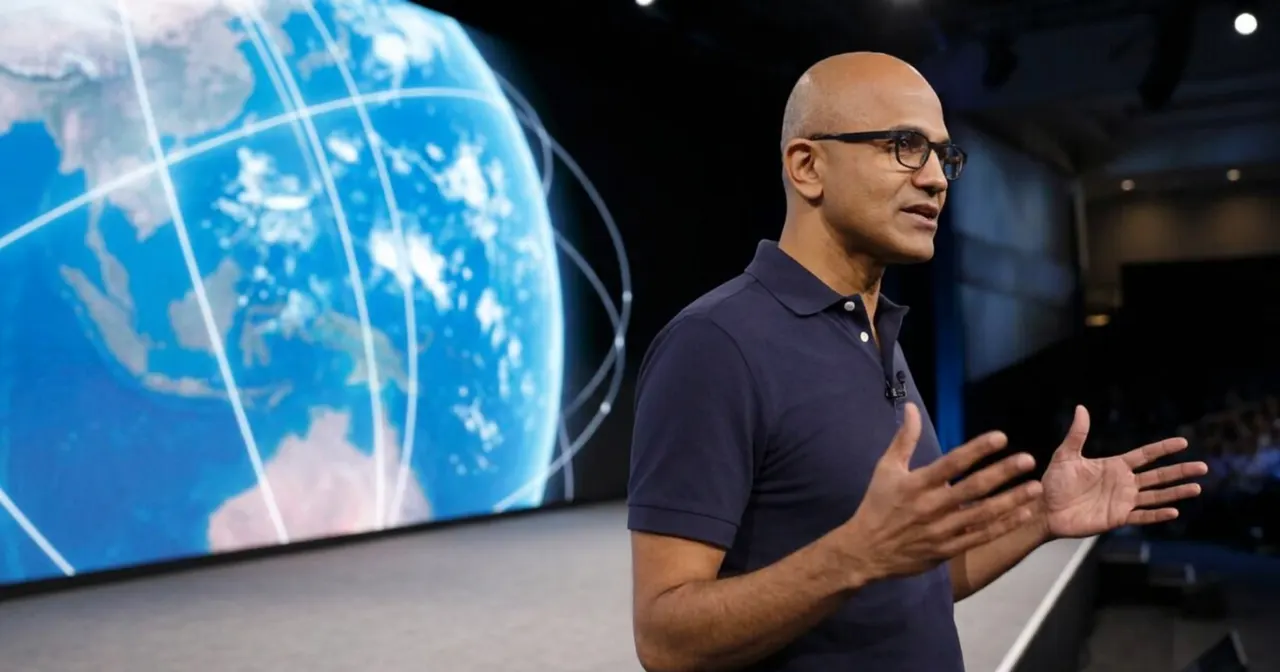
The latest wave of cuts is large enough to feel systemic. Microsoft offered buyouts to roughly 60,000 employees, about one-quarter of its global workforce, and Meta Platforms moved to lay off about 8,000 people, roughly 10% of its staff, the Los Angeles Times reported. U.S. technology employers disclosed 85,411 reductions from January through April, 33% more than in the same stretch a year earlier, according to Challenger, Gray & Christmas. [1]
California is taking a hard hit in information work. The state’s information jobs are down 16.8%, the steepest percentage decline among categories, according to the Public Policy Institute of California. The search itself has also gotten harder: PPIC found that about 30% of California workers have been unemployed for six months or longer, and California has 1.9 unemployed workers per job opening versus 1.1 nationally. [1]
The most granular payroll evidence does not show an economy-wide collapse. Stanford Digital Economy Lab researchers, using ADP data through June 2026, found no evidence of widespread displacement. But workers ages 22–25 in occupations highly exposed to AI are employed 19% below the level they would have reached had their job growth matched less-exposed peers; older workers show no comparable shortfall. The gap has widened since the lab first flagged it in August 2025, and it runs mainly through slower hiring, not more firings. [4]
For new graduates, the entry ramp is narrower. Unemployment among recent college graduates reached 5.6% at the start of 2026, a 1.6-point increase over three years, according to Federal Reserve Bank of New York data cited by Stanford’s Institute for Economic Policy Research. That adds pressure at a moment when California’s information sector is already shrinking. [1] [2]
Advertisement
The measurable cost is not a single layoff notice; it is time and competition. California has 1.9 unemployed workers per job opening, versus 1.1 nationally. PPIC’s finding that about 30% of California workers have been unemployed for six months or longer describes a search process that is longer and harder, even before AI is added to the explanation. [1]
Early-career workers face the sharpest edge. The Stanford Digital Economy Lab’s 19% gap for ages 22–25 in AI-exposed work is a descriptive indicator, not causal proof, but it lines up with a 5.6% new-graduate unemployment rate. Experienced workers in the same occupations have been relatively stable. The practical split is between routine, substitutable tasks and roles where AI complements workers. [2] [4]
The Times reported that a newly jobless corps of tech workers are rethinking their lives, with some taking pay cuts, leaving tech, returning to study, launching startups or retiring. That is not a statistical measure, but it captures the adjustment costs behind the aggregate numbers: career plans, pay expectations and training decisions all get rewritten when the entry ramp narrows. [1]
Public research money is another cost center. UC said it was the nation’s largest recipient of NIH and NSF grants in 2025. During President Trump’s current term, the administration tried to terminate UC research grants and fine UC more than $1 billion over what the Times called tenuous antisemitism claims. Faculty won a court fight to reverse the fine, but as much as $1 billion in federal support remains at risk; the Times also linked DOGE’s NIH targeting and biomedical cuts to job losses that may last years. [1]
Advertisement
California’s tech workforce has been through this kind of whiplash before. In 1972, science journalist Spencer Klaw visited MIT and found students and faculty chastened and uncertain after government science funding and hiring dried up. The Times recounted that Klaw detected anger as well as depression among people who had entered STEM expecting their skills to be valued. [1]
The Sputnik shock of 1957 had helped propel that generation into science. MIT physics chair Victor Weisskopf told Klaw that students had been told science was a national emergency, worked hard, and then some found themselves 'out on the street.' The lesson is not that today is 1972; it is that a career path can reverse within the years it takes to earn a degree. [1]
The dot-com bust is the closer California precedent. The 2000–2001 collapse was not triggered by a new technology arriving; it came when investors concluded dot-com firms were not producing the returns they had banked on. California unemployment went from 3.9% in December 2000 to 6.5% 12 months later and later peaked at 12.4% in January 2009 after the Great Recession, the Times reported. [1]
Government spending has repeatedly moved science and tech employment. For most of the postwar period California was a favored recipient of federal research money, and UC’s 10 campuses have consistently ranked at or near the top nationally. That makes budget and political fights over research grants a jobs story, not just a campus story. [1]
Advertisement
The current AI evidence is more nuanced than the layoff headlines. Stanford’s SIEPR, synthesizing research in July 2026, found scant support for the claim that AI is currently driving major job losses. Unemployment for the most AI-exposed quintile rose 0.77 percentage points since 2022; for the least-exposed quintile it rose slightly more, 0.85 points. That looks like a softening labor market, not a singular AI shock. [2]
Firm surveys also show adoption without mass headcount cuts. The Census Bureau’s nationally representative survey puts AI use at about 20% of firms; other measures are higher. Only 5% of firms in Census data report any employment effect, split evenly between gains and losses. Eighty percent of executives in a Federal Reserve Bank of Atlanta survey said AI investments had not yet altered their headcount or improved productivity, and a Danish study found task and time restructuring without effects on employment, hours or earnings. [2]
Productivity gains are real in experiments but uneven. A call-center assistant raised overall productivity 15%, with a 30% gain for novice and less-skilled agents. GitHub Copilot let software developers complete tasks 56% faster, with gains concentrated among less-experienced programmers. AI performance is jagged, though, and experimental gains may not yet show up in aggregate productivity. [2]
The layoff-AI link deserves skepticism. Dario Amodei, CEO of Anthropic, predicted AI could erase half of white-collar jobs and push unemployment to 20%, Stanford’s SIEPR brief noted. The Los Angeles Times, drawing on the same Stanford research, said that prospect remains conjectural. Stanford also cited OpenAI CEO Sam Altman’s complaint that tech companies are AI-washing layoffs; human-resource executives say AI shows up more in role consolidation and decisions not to hire where tasks can be automated. [1] [2]
Advertisement
Other forces muddy the causal story. The Federal Reserve began raising rates in March 2022, months before ChatGPT’s public release in November 2022. Pandemic-era remote work may have slowed on-the-job learning and eroded the value of hiring younger workers. Some researchers found hiring in AI-exposed occupations began falling after the Fed’s shift but before ChatGPT arrived; with added controls, Brynjolfsson and coauthors found entry-level declines were not notable until 2024. [2]
The Times noted that many companies are simply reversing a hiring boom from the immediate post-pandemic era, before AI began to infiltrate corporate America. That fits the Stanford evidence that AI’s aggregate effect is likely small right now, even as early-career workers in exposed occupations face a tougher market. [1] [2]
Those findings carry caveats. The Digital Economy Lab calls them early, descriptive indicators rather than causal estimates. The pattern weakens when controlling for education, shows some divergent trends before generative AI, and is more pronounced in the ADP sample than in national survey benchmarks, though there is some evidence of consistent patterns in government administrative data. It persists when excluding tech firms and computer occupations and when controlling for interest-rate exposure and remote work. [4]
Adoption is concentrated and narrow. Surveys show AI use is heaviest in tech and information-intensive sectors such as finance, and most common in sales, marketing, IT, strategy, finance and accounting. Even among adopters, use is often limited to one or two business functions or low-frequency tasks; comprehensive integration is the exception. A McKinsey survey found most businesses still experimenting, with few scaling beyond pilots. [2]
Several questions remain open. Will the 19% gap for young workers in AI-exposed occupations persist, narrow or spread to older age groups? Will firms move from AI pilots to broad deployment, and will that mean fewer jobs or reshuffled tasks? Will federal research funding stabilize, or will UC and NIH cuts create a longer California science shock? Will this chill look, in hindsight, more like a post-pandemic correction than an AI transition? These are questions, not forecasts. [1] [2] [4]
Watch entry-level hiring first. The Stanford Digital Economy Lab’s key finding is reduced hiring, not increased separations, for young workers in AI-exposed jobs. Watch California’s unemployed-per-opening ratio and PPIC’s measure of the share of California workers unemployed six months or longer. Watch federal research funding for UC and the NIH, because government spending has repeatedly shaped science and tech employment. And watch Census and Federal Reserve surveys for whether firm AI adoption starts showing up in headcount. [1] [2] [4]
What should readers do with this? The evidence does not justify treating AI as the only force in the job market. Experienced workers in AI-exposed occupations have held up better than early-career workers; routine and substitutable tasks face the tightest entry path. California’s long-term unemployment share and openings ratio argue for planning for longer searches and for not assuming one credential guarantees demand. The 1972 MIT episode is a warning, not a prophecy: a field can be promoted as a national priority and still hit a funding and hiring reversal within the time it takes to finish a degree. [1] [2] [4]
For policymakers, the Stanford evidence points to tracking and targeting rather than declaring an apocalypse. The Digital Economy Lab calls its findings early descriptive indicators and publishes AI Economic Indicators for ongoing tracking. SIEPR says better understanding of AI’s evolving labor-market impact is crucial for potential policy responses. That is a call for measurement, not a claim that a particular policy will work. [2] [4]
Sources
Prepared with AI assistance from the cited sources.
The Cali Reporter newsletter
The stories worth your time.
California, the country, and what comes next. Join our free newsletter for reporting that keeps you informed.
More in Business
- Nvidia CEO Resignation Sparks Market Volatility
The sudden resignation of Nvidia CEO Jensen Huang has triggered significant market reactions, with both the company’s stock and Bitcoin experiencing notable declines.
- Nvidia CEO Resignation Highlights Leadership and Governance Challenges
The resignation of Jensen Huang, CEO of Nvidia, has sparked discussions about corporate governance and leadership development, with insights from McKinsey's global managing partner, Bob Sternfels.
- Unocoin Suspends Services Amid Security Probe
Unocoin, an Indian cryptocurrency exchange, has suspended deposits and withdrawals following the detection of unauthorized activity and a potential breach of its systems.