California’s El Niño Winter: A Strong Coastal Signal, a Conditional Storm Forecast
Forecasters see greater confidence in tide-driven coastal flooding and erosion than in rainfall-driven inland hazards, with a wide range of possible winter outcomes.

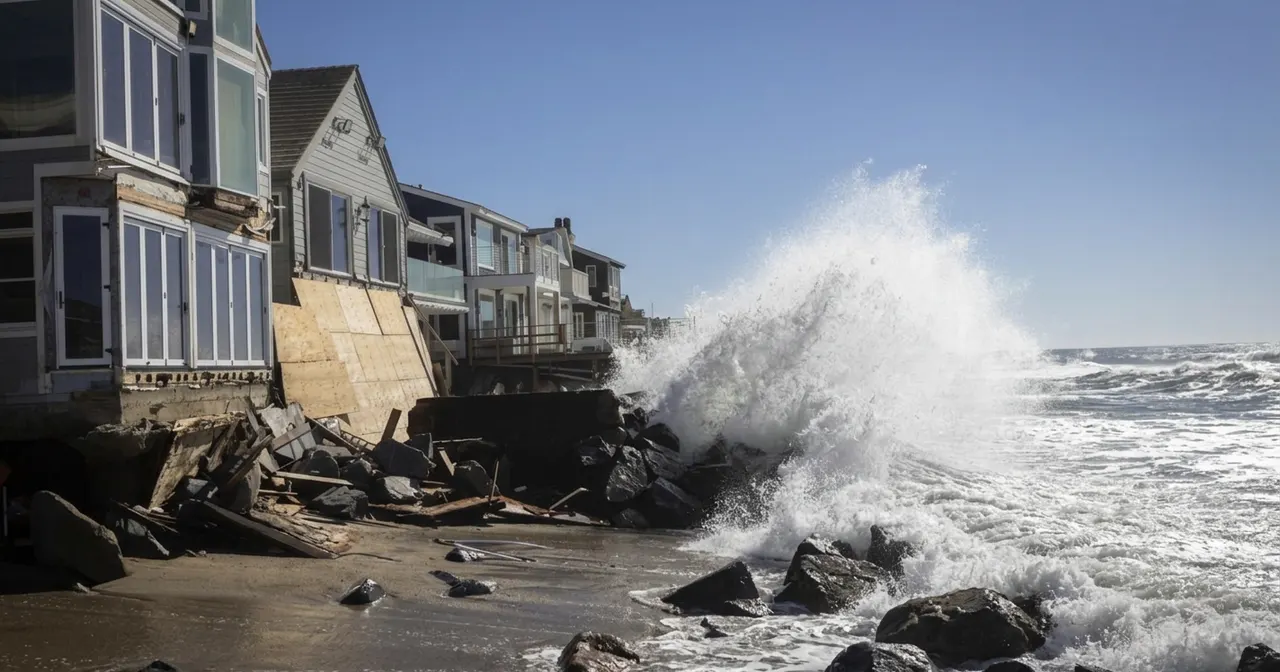
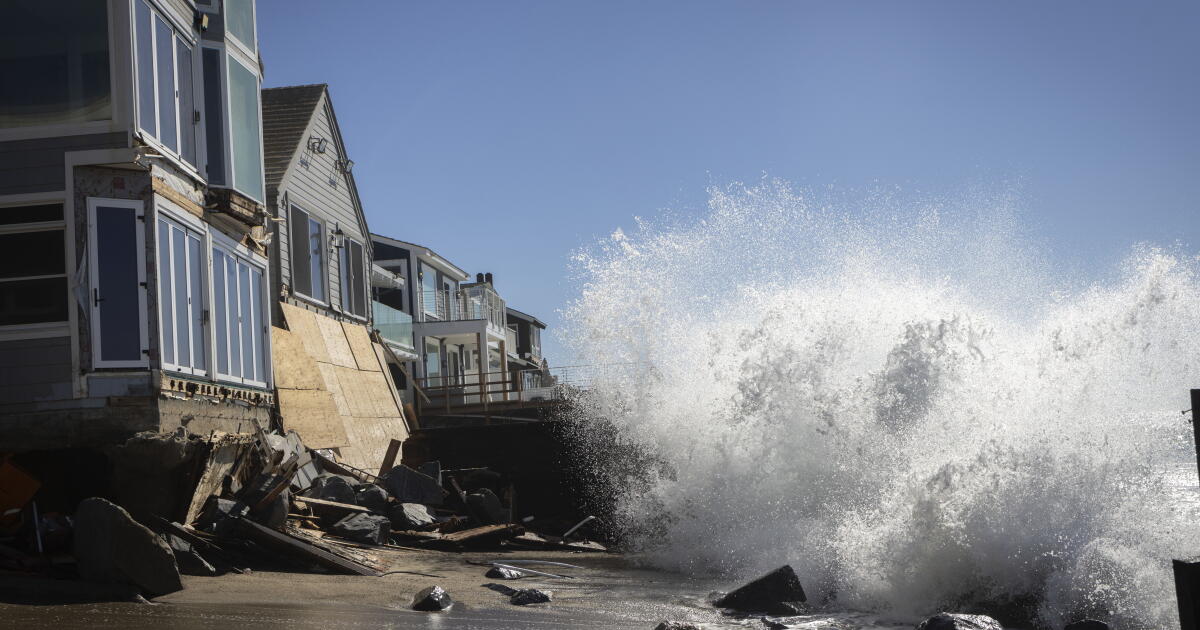
In mid-November, California faced a winter outlook split between a relatively firm coastal warning and a much less settled storm forecast. The source reported high expert confidence in coastal seawater flooding and beach erosion, driven by rising sea levels and strong surf, with three king-tide windows ahead: late November, late December and mid-January. By contrast, experts remained divided about how powerful winter storms would become, and some stressed a broad range of possible outcomes. The source framed the coastal risk as high-confidence and the storm risk as conditional. [1]
For the three-month stretch from January through March, NOAA’s seasonal outlook put Southern California’s probability of above-normal precipitation at 60% to 70%. Robbie Munroe, a National Weather Service meteorologist in Oxnard, said the remaining 30% to 40% covered near-normal or below-normal precipitation. That leaves a substantial chance—roughly one in three—that the season is not wetter than normal. Munroe described only moderate confidence, at best, for freshwater flooding and debris flows if heavier storm activity developed across Southern California, and said the winter was “not a slam dunk” in terms of how the overall season would occur. [1]
The source’s stated reasons for that split are specific: coastal flooding and erosion carry a stronger signal because they are tied to rising sea levels and strong surf, while freshwater flooding and debris flows depend on heavier storms that may or may not develop. The evidence therefore supports a probabilistic outlook with a more certain shoreline hazard and a more conditional inland storm hazard, not one all-purpose forecast. [1]
El Niño refers to anomalous warming of tropical Pacific waters off Peru and Ecuador, which can shift atmospheric patterns worldwide. For Southern California, the pattern often brings a wetter winter, though the relationship is not reliable from season to season. [1]
Advertisement
Recent winters illustrate the uncertainty. In three of the past four winters, Southern California received above-normal rain; only one of those wet seasons overlapped with El Niño. Munroe said that even if precipitation ends up above normal, it would not necessarily make the season much different from what the region has recently experienced. That record is a caution against treating any single El Niño season as a template. [1]
The Climate Prediction Center said Thursday that El Niño was still strengthening and that sea-surface temperatures were rising. The center put the probability of a “very strong” classification near 100%, and the odds that this event becomes the strongest since modern records began in 1950 at 60%. Those figures describe the Pacific pattern’s intensity, not a guarantee of California flooding. [1]
Julie Kalansky, a deputy director at a UC San Diego research center focused on Western weather and water extremes, said a big El Niño sets the stage and tilts the odds toward a wetter winter, especially in Southern California, but does not dictate the outcome. [1]
Daniel Swain, a UC Agriculture and Natural Resources climate scientist, cited output from the European Centre for Medium-Range Weather Forecasts’ SEAS 5.1 system, a seasonal model that projects ocean and atmosphere conditions months ahead. The model’s ensemble average implied that large stretches of the coast—including Southern California, the Bay Area and the Central Coast—could approach twice their normal January-March precipitation. [1]
Advertisement
Swain described a reasonable worst-case planning scenario as more than two and a half times average precipitation. He said that scenario is one state and local emergency managers ought to plan for. He also said rain and snow were forecast to return starting Friday and that he expected significant wet storms by December, especially from the Bay Area southward. In his view, January and February appeared most likely to bring heavy rain and potential flood concerns. [1]
Swain estimated high odds that the winter would rank among the 10 wettest on record. He put the coastwide probability of a record-wet winter at 10% or more, compared with under 1% in an ordinary year. Those are probability estimates and forecasts, not confirmed outcomes. [1]
Two past El Niño winters show the range of possibilities. The winter of 1982-83, when a strong El Niño coincided with a destructive storm season, damaged piers and flooded many homes. In 2015-16, the most recent powerful El Niño season, Southern California was relatively dry, although the coast did experience record erosion. The 1982-83 season shows what a strong El Niño can produce; 2015-16 shows that it need not. [1]
Jan Null, a meteorologist and adjunct professor at San José State University, cautioned that a very strong El Niño is not a certainty of massive California flooding. He noted that Southern California’s south coast recorded 77% of normal rainfall in 2015-16 and said a season’s destructive power depends on how rain is spaced across the winter. He said people should be prepared for more rainfall than normal. That distinction separates total seasonal precipitation from the burst intensity that drives floods and debris flows. [1]
Advertisement
Swain said predictive models now differ from those available before the 2015-16 season, and he pointed to new factors at play. He noted intense rains that recently flooded parts of Arizona, New Mexico, Utah and Colorado. He also described conditions without modern precedent: warm oceans, a warm atmosphere and high atmospheric water vapor. In his view, California should be on guard for potential very heavy precipitation and inland flood risk, while coastal flood risk is already present and worsening. [1]
In October, all-time sea-level records fell at San Pedro, Santa Barbara, San Diego Bay and La Jolla. The source attributed the setup to unusually high astronomical tides and to exceptionally warm water offshore. The tides were near peaks in an 18.6-year lunar-node cycle and a 4.4-year lunar-perigee cycle, while warmer water takes up more volume and raises sea level. [1]
Ocean heat tied to El Niño and human-caused warming has raised average Southern California sea level about 16 inches above what astronomical forces alone would suggest, according to the source. Swain called the sustained elevation for this time of year extraordinary and far above any past record during an El Niño. [1]
During the late-November king tides, astronomical tides by themselves are projected to run 6 inches to 1 foot above their late-October levels, depending on location, Swain said. King tides are also expected around the year-end holidays and in mid-January. Separately, Swain described a scenario in which a moderate or stronger storm coincides with peak king tides; under that scenario, total water levels could be 2 to 3 feet above the late-October record peaks. That is a scenario, not an asserted outcome. [1]
Advertisement
The source also recorded a dispute over messaging. Swain said critics had accused him of fearmongering and argued that El Niño can mean either wet or dry conditions for California. He said he was not trying to alarm people for dramatic effect but would clearly identify a notable signal for a potentially major event. [1]
A storm sequence was projected to arrive in California starting Friday and continue into early next week. Through Saturday, rainfall of one-quarter to 1 inch was expected to be common across Southern California, with a small chance of thunderstorms along the coast. The National Weather Service expected high surf, possibly enough to damage piers, with the Central Coast especially exposed over the weekend. [1]
The coast had already absorbed El Niño-influenced damage earlier in the year. The source reported flooding from San Diego to Marin County, damage to scores of homes and other structures, and erosion of coastal cliffs. Those effects are background to the winter outlook, not a prediction that the same damage will recur, and the source did not present them as the reason coastal confidence differs from inland confidence. [1]
The shoreline stakes were already visible. On Oct. 26, crews shifted sand from the floor of Alamitos Bay to build up the beach on the Long Beach Peninsula, where rising seas have badly damaged homes. Swain said coastal flood risk is already here and getting worse. [1]
Several questions remain open. How strong will individual storms be? How will rainfall be spaced across the winter? Will the aggressive model average verify, or will the season follow the weaker historical relationship seen in some past El Niño years? How much coastal flooding will occur if storms coincide with king tides? Will this winter resemble 1982-83 in storm damage, 2015-16 in Southern California dryness, or a wetter recent winter without El Niño? Will the Climate Prediction Center’s near-100% probability of a “very strong” event and 60% chance of a record-strong event verify? Will the winter rank among the 10 wettest, as Swain estimated, or track the 2015-16 Southern California pattern? [1]
The next watch periods are December, when Swain expected notable wet storms, and January and February, which he identified as the most likely months for heavy rain and flood concerns. The holiday tides around late November, year-end and mid-January are key coastal windows. Other signals include high surf and pier damage and whether additional coastal sea-level records fall. These are reference points for risk, not guarantees. [1]
Conditional scenarios frame the range. If a moderate or stronger storm coincides with peak king tides, Swain’s scenario puts total water levels 2 to 3 feet above the late-October record peaks. If not, coastal tides remain elevated. Inland, heavier storms could bring freshwater flooding and debris flows, but confidence in that outcome is only moderate at best. The evidence supports elevated risk and a wide range, not a single assured result. [1]
Sources
Prepared with AI assistance from the cited sources.
The Cali Reporter newsletter
The stories worth your time.
California, the country, and what comes next. Join our free newsletter for reporting that keeps you informed.
More in Los Angeles
- Los Angeles Officials Reach Preliminary Agreement on Olympic Contracts
Los Angeles officials have reached an unprecedented preliminary agreement to ensure local businesses receive a meaningful share of the estimated $4 billion in contracts for the 2028 Summer Olympics.
- California's New Insurance Commissioner Proposes Government-Run Wildfire Program
California's new insurance commissioner, Jane Kim, has introduced a plan to create a government-run wildfire insurance program aimed at addressing the state's growing home insurance crisis.
- Surfing Legend's Murder Investigation Expands
New evidence has emerged in the murder case of Kurt Van Dyke, a renowned California surfer, revealing a broader involvement of individuals beyond his girlfriend.