California Expands Wildfire Response with New Leadership and Technology
California has made significant strides in wildfire preparedness, with new leadership and cutting-edge technology enhancing the state's ability to detect and respond to wildfires more effectively.
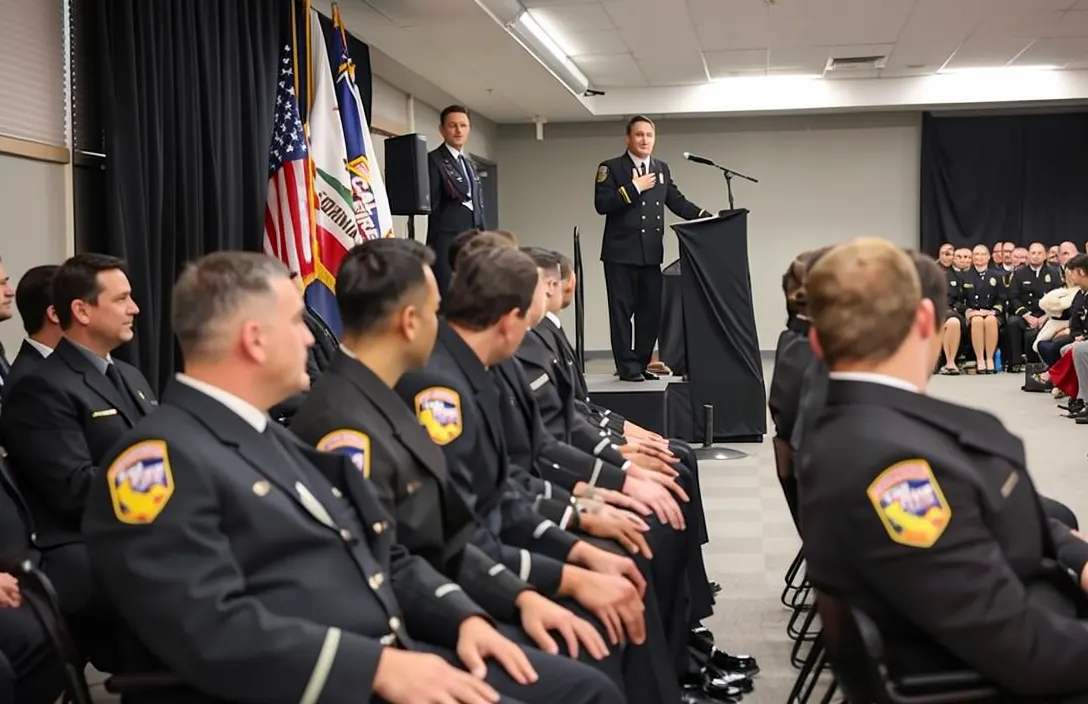
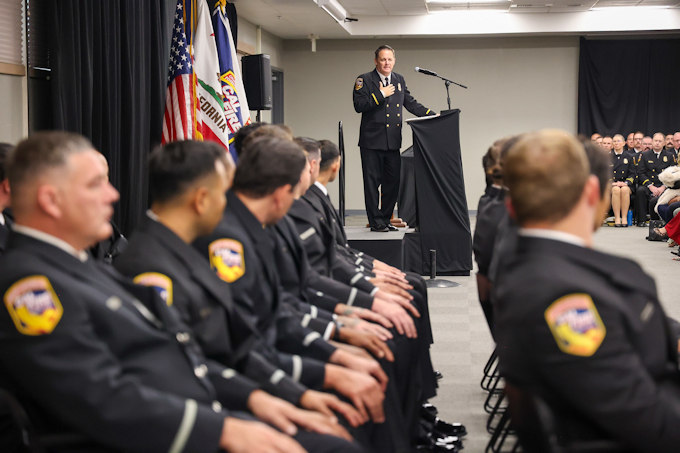
In November 2026, 29 new CAL FIRE Company Officers graduated from the department’s final leadership academy of the year, bringing the total number of Company Officers graduated in 2026 to 534. These officers join more than 3,600 emergency response leaders who have graduated since 2019 (Sierra Sun Times). The expansion of CAL FIRE’s leadership ranks is part of a broader effort under Governor Newsom to strengthen the state’s firefighting capabilities. Since 2019, CAL FIRE’s fire protection workforce has grown from 8,000 to over 14,000 positions, supported by a budget increase from $2 billion to $3.8 billion (Sierra Sun Times). [1]
Alongside the leadership academy graduation, California’s fifth C-130 Hercules airtanker has entered service, adding to the state’s aerial firefighting fleet. Each C-130 can drop up to 4,000 gallons of retardant in a single pass, providing critical support to ground crews during wildfires (Sierra Sun Times). The investment in aerial resources complements the state’s efforts to expand its firefighting force and improve emergency response. These tools, combined with increased training and leadership development, are part of a multi-year strategy to enhance wildfire readiness and protect communities (Sierra Sun Times). [1]
California’s wildfire readiness efforts also include the development of advanced technology, such as the Fire Integrated Real-Time Intelligence System (FIRIS), which provides real-time aerial intelligence and predictive analytics to support wildfire response (www.caloes.ca.gov). In addition, the state has launched three FireSat wildfire detection satellites, which will help detect fires earlier and improve situational awareness for firefighters (www.gov.ca.gov). These technological advancements, combined with expanded training programs and a larger firefighting workforce, are helping California prepare for increasingly severe wildfire seasons (www.gov.ca.gov). [3] [4]
In November 2026, 29 new CAL FIRE Company Officers graduated from the department’s final leadership academy of the year, bringing the total number of Company Officers graduated in 2026 to 534 (www.gov.ca.gov). This milestone is part of a broader initiative to strengthen California’s firefighting force, which has grown from 8,000 positions in 2019 to over 14,000 today. Governor Gavin Newsom emphasized that this expansion is a result of nearly eight years of investment, aimed at ensuring a faster and more effective response to wildfires. The leadership training program has more than tripled its capacity, with new training centers in Redding and Atwater contributing to the development of over 2,200 graduates annually (www.gov.ca.gov). [1] [4]
Advertisement
Alongside the leadership academy graduation, California’s fifth C-130 Hercules airtanker has entered service, adding to the state’s aerial firefighting fleet (www.gov.ca.gov). These aircraft can drop up to 4,000 gallons of retardant in a single pass, helping to slow fast-moving fires and buy crews on the ground time to respond. The C-130 fleet has already dropped nearly two million gallons of retardant and flown more than 500 hours on fire missions in 2026 alone. Additional aircraft from the U.S. Coast Guard are expected to join the fleet in 2027, further enhancing California’s aerial firefighting capabilities (www.gov.ca.gov). [1] [4]
California’s wildfire readiness also includes the development of advanced technology, such as the Fire Integrated Real-Time Intelligence System (FIRIS), which provides real-time aerial intelligence and predictive analytics to support wildfire response (www.caloes.ca.gov). FIRIS utilizes cutting-edge sensors and computing power mounted on crewed fixed-wing aircraft to deliver immediate information to first responders and coordination leaders. The data is shared with a ground-based supercomputer and fusion center, enabling faster decision-making to protect life, property, and the environment. This system is part of California’s commitment to leveraging technology for more effective wildfire management (www.caloes.ca.gov). [3]
On July 7, 2026, Governor Gavin Newsom announced the historic launch of the first three FireSat wildfire detection satellites from Vandenberg Space Force Base, a collaboration between California and the Earth Fire Alliance (EFA) (www.gov.ca.gov). These satellites, developed by California-based spacecraft manufacturer Muon Space, are specifically designed to detect wildfires and will begin delivering wildfire data within months of launch. This launch is the first step toward a full constellation of more than 50 satellites by 2030, which will cover the entire planet every 20 minutes, detecting fires as small as a schoolyard before they grow into megafires (www.gov.ca.gov). [4]
The three satellites will use frequent high-resolution data to identify and monitor wildfires in real time, helping firefighters combat wildfires and protect life and property (www.gov.ca.gov). Following liftoff, the satellites will undergo a three-month commissioning and calibration period before beginning operational data delivery. This launch represents years of collaboration and innovation to improve operational wildfire readiness and enhance frontline situational awareness (www.gov.ca.gov). [4]
Advertisement
CAL FIRE Director and Fire Chief Joe Tyler stated that the FireSat launch marks a transformative step toward space-enabled wildfire intelligence, strengthening California’s resilience and demonstrating the power of global collaboration in confronting increasingly complex fire years (www.gov.ca.gov). California played a foundational role in FireSat’s development, conducting early testing and concept evaluation even before EFA formally existed (www.gov.ca.gov). [4]
Sources
Prepared with AI assistance from the cited sources.
The Cali Reporter newsletter
The stories worth your time.
California, the country, and what comes next. Join our free newsletter for reporting that keeps you informed.
More in California
- Survivors Support Governor Newsom's Commutation of Death Sentences
Survivors of violent crime in California have expressed support for Governor Gavin Newsom's decision to commute all death sentences, emphasizing the need for healing and resources over state-sanctioned killing.
- Caltrans Announces Winter Closure of Mountain Passes
Caltrans has officially closed several mountain passes in California due to recent snowfall and adverse weather conditions, ensuring the safety of drivers and maintenance crews.
- Documentary Explores Indigenous History of California
A new documentary series, 'People of the West,' delves into the history of California's Indigenous communities through Native voices and perspectives, highlighting overlooked aspects of their past and ongoing struggles…