Black Women's Political Influence in Brazil's 2026 Election
The 2026 Brazilian election saw a significant rise in the political influence of Black women, who played a crucial role in Lula's re-election and the increased representation of Black women in Congress.

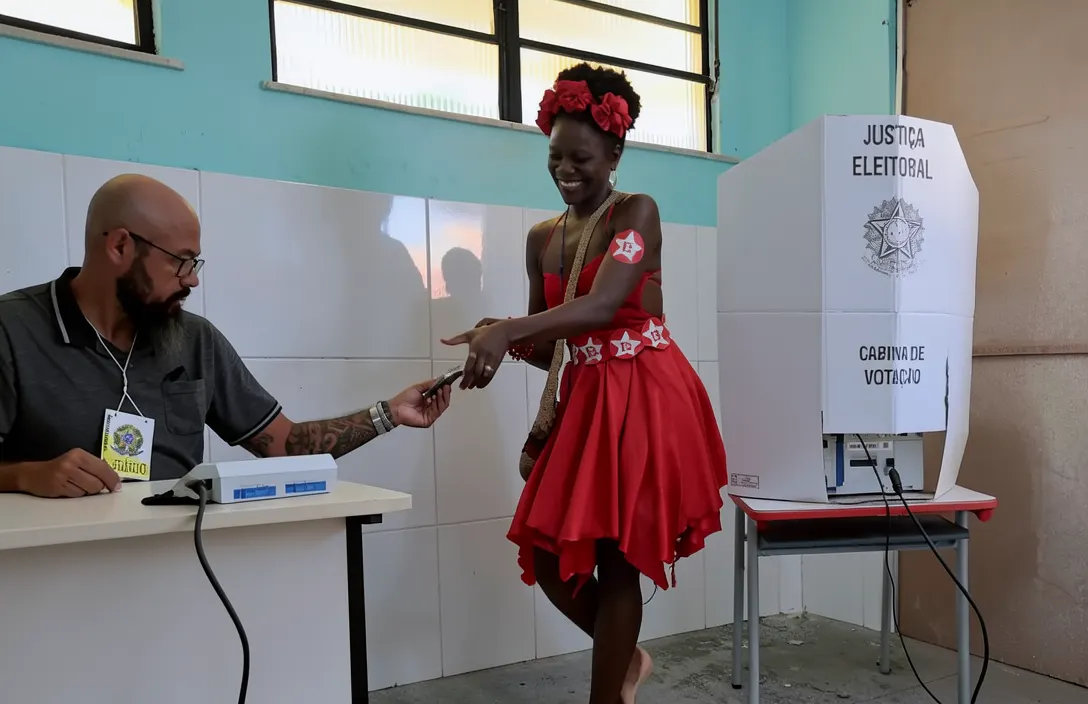

The reelection of President Luiz Inácio Lula da Silva in late October 2026 was notable for the remarkable role of Black Brazilian women voters and politicians (Source ID: 1). Black women candidates were crucial in digital mobilization efforts encouraging voters to support Lula during the first and second rounds of the election and were decisive in his victory. According to the government-run Agência Brasil, a record 15 Black women will now be sworn in to Congress as federal deputies on Feb. 1, 2027, an increase of 67% from 2022. [1]
The election cycles of 2018 and 2020 saw an initial surge in Black women running for, and winning, elected offices around the country that only increased in 2026 (Source ID: 1). Despite their gains in the lower house of the Brazilian legislature, however, no Black women will serve come February in Brazil’s Senate. Indeed, in the past, only a handful of Black women have served in office at the city, state or federal level. [1]
Many of the Black women who ran for office in 2026 ran as “Marielle’s seeds” – a reference to late Rio City Councilwoman Marielle Franco (Source ID: 1). The Marielle Franco Institute – established by her family in Franco’s memory – promoted the social media campaign “Vote por Marielle” to drive support for progressive politicians. Social media campaigns have been widely credited for motivating younger voters and helping Lula overturn a first-round loss to Flávio Bolsonaro. [1]
Among the notable Black women elected to Congress in the October vote was 21-year-old Workers’ Party candidate Ana Elisa Santos Silva from the state of Minas Gerais (Source ID: 1). Her win was aided by social media – she had 2 million Instagram followers going into the vote, a number that swelled to 6 million after the second round of voting. She was also enlisted to help Lula’s successful social media campaign, with her own message focused on combating disinformation in social media, antiracism and defending equality. [1]
Advertisement
The reelection of President Luiz Inácio Lula da Silva in late October 2026 was widely seen as bucking the trend of ascendant right-wing populism in South America. Yet Brazil’s general election was notable for another reason: the remarkable role of Black Brazilian women voters and politicians. Black women candidates were crucial in digital mobilization efforts encouraging voters to support Lula during the first and second rounds of the election and were decisive in his victory (Source ID: 1). [1]
A record 15 Black women will now be sworn in to Congress as federal deputies on Feb. 1, 2027, according to the government-run Agência Brasil – an increase of 67% from 2022. The election cycles of 2018 and 2020 saw an initial surge in Black women running for, and winning, elected offices around the country that only increased in 2026. Black women have been at the forefront of anti-racist and feminist activism in Brazil for five decades, but their increased engagement in electoral politics is more novel (Source ID: 1). [1]
Many of the Black women who ran for office in 2026 ran as “Marielle’s seeds” – a reference to late Rio City Councilwoman Marielle Franco. Her death also galvanized large numbers of Black women to engage in politics and run for office. During the 2026 election, the Marielle Franco Institute – established by her family in Franco’s memory – promoted the social media campaign “Vote por Marielle” to drive support for progressive politicians (Source ID: 1). [1]
The 2026 Brazilian general election was notable for the significant role played by Black Brazilian women voters and politicians in securing President Luiz Inácio Lula da Silva's reelection. Black women candidates were crucial in digital mobilization efforts encouraging voters to support Lula during the first and second rounds of the election and were decisive in his victory (Source ID: 1). A record 15 Black women will now be sworn in to Congress as federal deputies on Feb. 1, 2027, according to the government-run Agência Brasil – an increase of 67% from 2022 (Source ID: 1). [1]
Advertisement
The election cycles of 2018 and 2020 saw an initial surge in Black women running for, and winning, elected offices around the country that only increased in 2026. Black women have been at the forefront of anti-racist and feminist activism in Brazil for five decades, but their increased engagement in electoral politics is more novel (Source ID: 1). An emerging voting bloc, Brazil’s last census, in 2022, found that 56% of the population was Afro-descendant when 'Black' and 'brown' color categories were combined (Source ID: 1). [1]
Many of the Black women who ran for office in 2026 ran as 'Marielle’s seeds' – a reference to late Rio City Councilwoman Marielle Franco. Her death in 2018 galvanized large numbers of Black women to engage in politics and run for office. During the 2026 election, the Marielle Franco Institute promoted the social media campaign 'Vote por Marielle' to drive support for progressive politicians (Source ID: 1). [1]
Among the notable Black women elected to Congress in the October vote was 21-year-old Workers’ Party candidate Ana Elisa Santos Silva from the state of Minas Gerais. Her win was aided by social media – she had 2 million Instagram followers going into the vote, a number that swelled to 6 million after the second round of voting (Source ID: 1). [1]
The reelection of President Luiz Inácio Lula da Silva in late October 2026 was notable for the remarkable role of Black Brazilian women voters and politicians (Source ID: 1). Black women candidates were crucial in digital mobilization efforts encouraging voters to support Lula during the first and second rounds of the election and were decisive in his victory. A record 15 Black women will now be sworn in to Congress as federal deputies on Feb. 1, 2027, according to the government-run Agência Brasil – an increase of 67% from 2022 (Source ID: 1). [1]
Advertisement
The election cycles of 2018 and 2020 saw an initial surge in Black women running for, and winning, elected offices around the country that only increased in 2026 (Source ID: 1). Many of the Black women who ran for office in 2026 ran as “Marielle’s seeds” – a reference to late Rio City Councilwoman Marielle Franco (Source ID: 1). The Marielle Franco Institute – established by her family in Franco’s memory – promoted the social media campaign “Vote por Marielle” to drive support for progressive politicians (Source ID: 1). [1]
Among the notable Black women elected to Congress in the October vote was 21-year-old Workers’ Party candidate Ana Elisa Santos Silva from the state of Minas Gerais (Source ID: 1). Her win was aided by social media – she had 2 million Instagram followers going into the vote, a number that swelled to 6 million after the second round of voting (Source ID: 1). She was also enlisted to help Lula’s successful social media campaign, with her own message focused on combating disinformation in social media, antiracism and defending equality (Source ID: 1). [1]
Sources
The Conversation – Articles (US)
Prepared with AI assistance from the cited sources.
The Cali Reporter newsletter
The stories worth your time.
California, the country, and what comes next. Join our free newsletter for reporting that keeps you informed.
More in Explainers
- NATO Confronts Escalating Russian Airspace Violations
NATO has faced a sharp increase in Russian airspace violations, with incidents rising sharply in 2025 and continuing into 2026, according to a systematic review of data and events.
- Target-Date Funds and Market Volatility in Retirement Savings
Market fluctuations, particularly in tech stocks like Nvidia, are prompting concerns about the impact on retirement savings held in target-date funds. These funds automatically adjust their asset allocation as…
- Understanding Polyglotism: What It Really Means to Speak Multiple Languages
The term 'polyglot' is often used to describe individuals who speak multiple languages, but determining the exact criteria for such a label remains a complex and debated topic. This section explores historical and…