Bangladesh Garment Workers Protest Over Wage Disputes
Garment workers in Bangladesh have escalated protests over stalled wage negotiations, leading to clashes with police and disruptions in the country's key export sector.

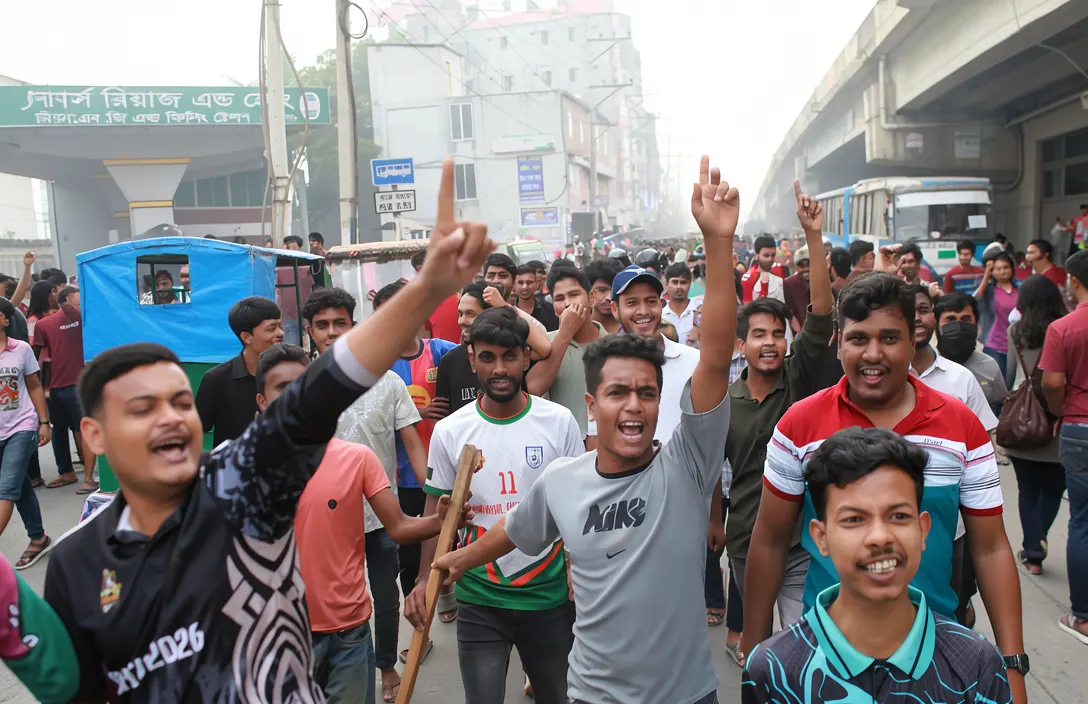

Protesters in Bangladesh hurled bricks, torched vehicles, and blocked the main highway between the capital, Dhaka, and the key financial district of Mymensingh as tensions flared over stalled wage negotiations (source ID: 1). Police responded by firing tear gas and stun grenades at thousands of garment workers who gathered in protest after a key wage board meeting was postponed. The unrest reflects growing dissatisfaction among workers over wages, which have not kept pace with rising living costs, including food, housing, and healthcare expenses (source ID: 1). [1]
Bangladesh is the world’s second-biggest garment exporter, producing clothing for major international brands, but the industry is now facing significant disruption as about 500 of the country’s 4,500 garment factories remain closed (source ID: 1). Workers are demanding a minimum monthly wage of 30,000 taka ($240), a 140-percent increase over the current 12,500 taka, citing the need for better living standards (source ID: 1). A 'no work, no pay' provision in the country's labor laws allows factory owners to suspend operations and withhold wages when production is disrupted, exacerbating the situation (source ID: 1). [1]
The wage board, established by the government earlier this month to negotiate a pay rise, had its meeting postponed after a member representing garment workers claimed to be unwell (source ID: 1). The next scheduled meeting is set for November 23, according to the board. Meanwhile, Border Guard Bangladesh (BGB) has increased patrols in the industrial zones, using drones, body-worn cameras, and other monitoring equipment to track demonstrations (source ID: 1). [1]
Protesters in Bangladesh hurled bricks, torched vehicles, and blocked the main highway between the capital, Dhaka, and the key financial district of Mymensingh as tensions flared over stalled wage negotiations (source ID: 1). Bangladesh is the world’s second-biggest garment exporter, producing clothing for major international brands, but the industry is now facing significant disruption as about 500 of the country’s 4,500 garment factories remain closed (source ID: 1). [1]
Advertisement
Workers are demanding a minimum monthly wage of 30,000 taka ($240) – a 140-percent increase on the current 12,500 taka, as they struggle to cope with rising food, housing, transport, and healthcare costs (source ID: 1). The wage board, established by the government earlier this month to negotiate a pay rise, had its meeting postponed after a member representing garment workers claimed to be unwell (source ID: 1). [1]
A “no work, no pay” provision in the country’s labour laws allows factory owners to suspend operations and withhold wages when production is disrupted (source ID: 1). Tensions were also running high in the garment hubs of Savar and Ashulia on Dhaka’s outskirts (source ID: 1). [1]
In the wake of Tuesday’s protest, Border Guard Bangladesh (BGB) stepped up patrols across the industrial zone, deploying hundreds of personnel (source ID: 1). The force said it was also using drones, body-worn cameras, and other devices to keep a close watch on demonstrations (source ID: 1). [1]
Protesters in Bangladesh hurled bricks, torched vehicles, and blocked the main highway between the capital, Dhaka, and the key financial district of Mymensingh as tensions flared over stalled wage negotiations (source ID: 1). Bangladesh is the world’s second-biggest garment exporter, producing clothing for major international brands, but the industry is now facing significant disruption as about 500 of the country’s 4,500 garment factories remain closed (source ID: 1). [1]
Advertisement
Workers are demanding a minimum monthly wage of 30,000 taka ($240) – a 140-percent increase on the current 12,500 taka, as they struggle to cope with rising food, housing, transport, and healthcare costs (source ID: 1). A “no work, no pay” provision in the country’s labour laws allows factory owners to suspend operations and withhold wages when production is disrupted (source ID: 1). [1]
The wage board, established by the government earlier this month to negotiate a pay rise, had its meeting postponed after a member representing garment workers claimed to be unwell (source ID: 1). In the wake of Tuesday’s protest, Border Guard Bangladesh (BGB) stepped up patrols across the industrial zone, deploying hundreds of personnel (source ID: 1). [1]
Protesters in Bangladesh hurled bricks, torched vehicles, and blocked the main highway between the capital, Dhaka, and the key financial district of Mymensingh as tensions flared over stalled wage negotiations (source ID: 1). Bangladesh is the world’s second-biggest garment exporter, producing clothing for major international brands, but the industry is now facing significant disruption as about 500 of the country’s 4,500 garment factories remain closed (source ID: 1). [1]
Workers are demanding a minimum monthly wage of 30,000 taka ($240) – a 140-percent increase on the current 12,500 taka, as they struggle to cope with rising food, housing, transport, and healthcare costs (source ID: 1). A “no work, no pay” provision in the country’s labour laws allows factory owners to suspend operations and withhold wages when production is disrupted (source ID: 1). [1]
Advertisement
The wage board, established by the government earlier this month to negotiate a pay rise, had its meeting postponed after a member representing garment workers claimed to be unwell (source ID: 1). In the wake of Tuesday’s protest, Border Guard Bangladesh (BGB) stepped up patrols across the industrial zone, deploying hundreds of personnel (source ID: 1). [1]
Sources
Prepared with AI assistance from the cited sources.
The Cali Reporter newsletter
The stories worth your time.
California, the country, and what comes next. Join our free newsletter for reporting that keeps you informed.
More in World
- Irish Man Charged with Destroying U.S. Military Aircraft at Shannon Airport
A man from Ireland has been indicted for allegedly destroying a U.S. military aircraft at Shannon Airport, according to prosecutors in New York.
- Trump's APEC Summit and Strategic Meetings
President Donald Trump is set to attend the APEC summit in Shenzhen, China, where he is expected to meet with Chinese President Xi Jinping and participate in a trilateral meeting with Russian President Vladimir Putin,…
- Early Snowfall in Northern England and Scotland
Snowfall occurred in parts of Northern England and southern Scotland, with subsequent melting due to milder temperatures, according to the BBC.