Bab el-Mandeb Strait: A Critical Humanitarian and Economic Corridor Under Threat
The Bab el-Mandeb Strait, a vital passage for trade, migration, and humanitarian aid, is facing unprecedented challenges due to escalating conflicts and displacement in the region.

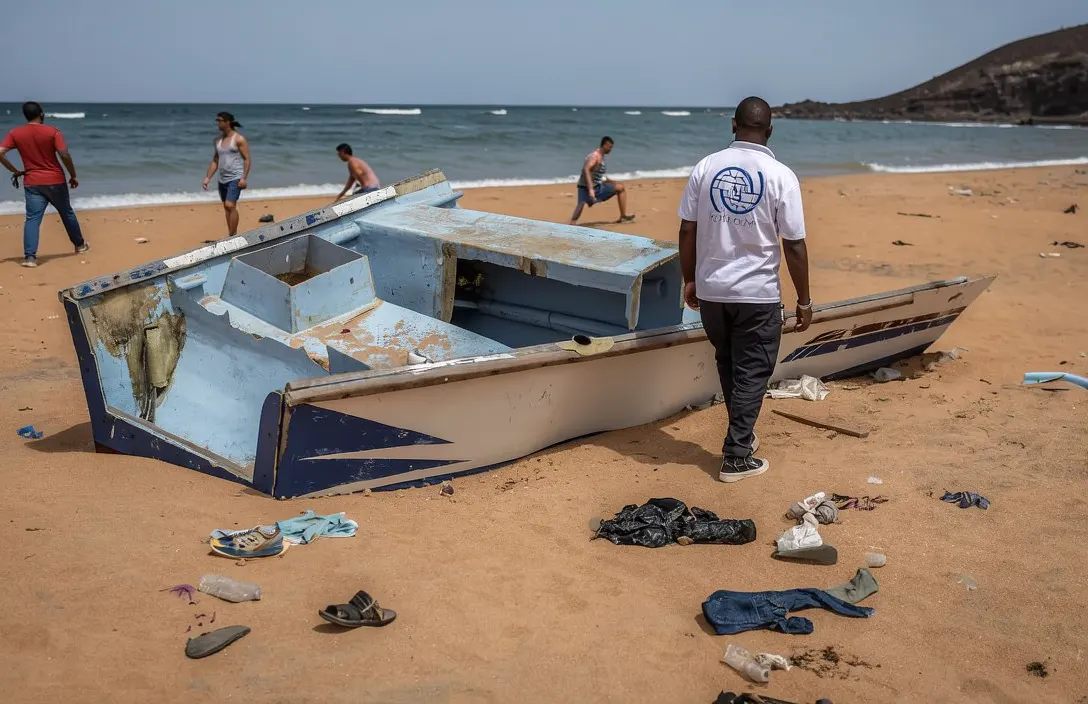

In recent days, Iran-backed Houthi forces have gained greater control of the Bab el-Mandeb Strait, a vital hub of trade, travel, and migration between the Middle East and Africa (Evidence ID: 1). The partial closing of the Strait of Hormuz as part of the war in Iran – and escalating conflicts in Yemen, Ethiopia, and Eritrea – had already brought this narrow waterway into new global prominence. Control over the Bab el-Mandeb Strait remains critical to military operations and commodity markets throughout the region. However, the Bab el-Mandeb’s strategic geopolitical and commercial shipping importance has largely overshadowed its role as a critical humanitarian corridor. Last year, more than 900 people died or went missing trying to cross the strait. [1]
In October 2026, a boat capsized off the coast of Djibouti carrying nearly 300 people, many of whom were escaping violence and persecution (Evidence ID: 1). The shipwreck, which occurred near Guehere, north of Obock, resulted in a death toll that rose to 139, with 84 people still missing (Evidence ID: 2). Search and rescue efforts are continuing, but the tragedy underscores the dangers faced by migrants attempting to cross the Bab el-Mandeb Strait. The boat was carrying 305 people from Djibouti towards Yemen when it went down in the early hours of Friday. About 82 people survived. [1] [2]
The Bab el-Mandeb Strait also serves as a critical economic lifeline for millions of people living in Ethiopia, Kenya, Somaliland, Somalia, and elsewhere who rely on commercial goods imported from the Middle East and Asia (Evidence ID: 1). However, the Houthi forces in charge of increasing swaths of southwestern Yemen now control most critical ports and islands in the strait, increasing the risks and costs of transit and trade. The strait has either been closed or has become a bottleneck, allowing only limited shipping traffic since September 2026. Many cargo ships have been delayed or rerouted, causing businesses in fragile regional economies to pass higher transport and fuel costs on to their customers. [1]
Disruptions to shipping routes have also had significant implications for global food security. The flow of food, fuel, and fertilizer between countries is essential to global food security, and when major shipping routes are disrupted, the effects can be felt across continents (Evidence ID: 3). WFP’s operations have been exposed to 20 percent higher shipping costs and 35 percent higher prices for airplane fuel, reducing the resources available to deliver life-saving assistance for people in need. Countries that rely heavily on imports, such as those in Africa and the Middle East, are particularly vulnerable to these disruptions, which are already affecting humanitarian supply chains and pushing millions into acute hunger. [3]
Advertisement
In recent days, Iran-backed Houthi forces have gained greater control of the Bab al-Mandeb Strait, a vital hub of trade, travel and migration between the Middle East and Africa (Evidence ID: 1). The partial closing of the Strait of Hormuz as part of the war in Iran – and escalating conflicts in Yemen, Ethiopia and Eritrea – had already brought this narrow waterway into new global prominence. Control over the Bab el-Mandeb Strait remains critical to military operations and commodity markets throughout the region. However, the Bab el-Mandeb’s strategic geopolitical and commercial shipping importance has largely overshadowed its role as a critical humanitarian corridor. Bab el-Mandeb means “gate of lamentation” or, more poetically, “gate of tears” in Arabic. It remains one of the most dangerous migration passages in the world. Last year, more than 900 people died or went missing trying to cross (Evidence ID: 1). [1]
In October 2026, a boat capsized off the coast of Djibouti carrying nearly 300 people, many of whom were escaping violence and persecution (Evidence ID: 1). The Bab el-Mandeb Strait also serves as a critical economic lifeline for millions of people living in Ethiopia, Kenya, Somaliland, Somalia, and elsewhere who rely on commercial goods imported from the Middle East and Asia. Disruptions to shipping routes have also had significant impacts on humanitarian aid and commercial trade. The Houthi forces in charge of increasing swaths of southwestern Yemen now control most critical ports and islands in the strait, increasing the risks and costs of transit and trade. The strait has either been closed or has become a bottleneck, allowing only limited shipping traffic since September 2026 (Evidence ID: 1). [1]
Djibouti shipwreck: Death toll rises to 139 as 84 remain missing. The boat was carrying 305 people from Djibouti towards Yemen when it went down near Guehere, north of Obock, in the early hours of Friday. About 82 people survived. IOM described it as one of the deadliest shipwrecks recorded on the Eastern Route, which runs from the Horn of Africa to the Arabian Peninsula (Evidence ID: 2). The shipwreck comes as Djibouti deals with continued traffic in both directions. Since 10 September, IOM’s Displacement Tracking Matrix has recorded more than 20,000 movements into the country from Ethiopia, as migrants keep heading for the Gulf despite the return to full-scale fighting in Yemen. Over roughly the same period, more than 3,700 refugees have arrived from Yemen, while 539 Ethiopian migrants have come back from there (Evidence ID: 2). [2]
The Bab el-Mandeb Strait, a critical hub for trade, migration, and humanitarian aid between the Middle East and Africa, has become increasingly dangerous due to the growing influence of Iran-backed Houthi forces (Evidence ID: 1). Control over this strategic waterway has intensified security risks, leading to disruptions in shipping and trade that affect millions of people in Ethiopia, Kenya, Somaliland, Somalia, and other regions reliant on imports from the Middle East and Asia (Evidence ID: 1). These disruptions have also contributed to rising costs for commercial goods, further straining fragile economies in the region (Evidence ID: 1). [1]
Advertisement
A tragic shipwreck off the coast of Djibouti in October 2026 highlights the perilous conditions for migrants attempting to cross the Bab el-Mandeb Strait. The incident, which resulted in 139 deaths and left 84 people missing, underscores the dangers faced by those fleeing conflict and persecution (Evidence ID: 2). The boat, which was carrying 305 people from Djibouti toward Yemen, is one of the deadliest shipwrecks recorded on the Eastern migration route (Evidence ID: 2). The tragedy has compounded existing challenges, as Djibouti continues to manage a surge of both incoming and returning migrants amid ongoing regional instability (Evidence ID: 2). [2]
Disruptions to shipping routes through the Bab el-Mandeb Strait have also had significant implications for global food security. As one of the key pathways for the movement of food, fuel, and fertilizer, the strait plays a crucial role in maintaining global supply chains (Evidence ID: 3). Delays and rerouting of cargo have led to increased costs and delays in the delivery of humanitarian aid, affecting millions of people in vulnerable regions such as Yemen, Sudan, and parts of the Horn of Africa (Evidence ID: 3). These disruptions threaten to push more people into hunger and exacerbate existing food insecurity challenges (Evidence ID: 3). [3]
Disruptions to shipping routes through the Bab el-Mandeb Strait have significant implications for global food security, as highlighted by recent evidence and analysis (Evidence ID: 3). The flow of food, fuel, and fertilizer between countries is essential to global food security, from farmers growing their crops to trucks being able to deliver produce to markets. Conversely, when major shipping routes are disrupted, causing delays and sharp price rises, the effects reverberate across continents and threaten the most vulnerable communities (Evidence ID: 3). [3]
The Bab el-Mandeb Strait connects trade moving between Asia and Europe through the Red Sea and the Suez Canal, playing a vital role in moving the commodities that global food systems depend on (Evidence ID: 3). Commercial traffic through the Strait of Hormuz remains below normal levels, while security risks continue around the Bab al-Mandeb Strait and conflict continues to disrupt trade through the Black Sea (Evidence ID: 3). Many shipping companies are still choosing longer routes around the Cape of Good Hope – increasing transit times, adding costs, and creating uncertainty across global supply chains (Evidence ID: 3). [3]
Advertisement
Higher oil prices affect food security as food systems rely on energy at almost every stage, from irrigation systems to food processing and transport. When energy costs rise, the cost of producing and moving food often rises too, leading to increased food prices for consumers (Evidence ID: 3). The disruptions also affect humanitarian operations, with WFP's operations exposed to 20 percent higher shipping costs and 35 percent higher prices for airplane fuel, reducing the resources available to deliver life-saving assistance for people in need (Evidence ID: 3). [3]
Sources
The Conversation – Articles (US)
Prepared with AI assistance from the cited sources.
The Cali Reporter newsletter
The stories worth your time.
California, the country, and what comes next. Join our free newsletter for reporting that keeps you informed.
More in Explainers
- NATO Confronts Escalating Russian Airspace Violations
NATO has faced a sharp increase in Russian airspace violations, with incidents rising sharply in 2025 and continuing into 2026, according to a systematic review of data and events.
- Target-Date Funds and Market Volatility in Retirement Savings
Market fluctuations, particularly in tech stocks like Nvidia, are prompting concerns about the impact on retirement savings held in target-date funds. These funds automatically adjust their asset allocation as…
- Understanding Polyglotism: What It Really Means to Speak Multiple Languages
The term 'polyglot' is often used to describe individuals who speak multiple languages, but determining the exact criteria for such a label remains a complex and debated topic. This section explores historical and…