Ancient Cathedral Floor Unearthed in Sudan
Archaeologists in Sudan have uncovered the original floor of a medieval cathedral, revealing its massive size and historical significance.

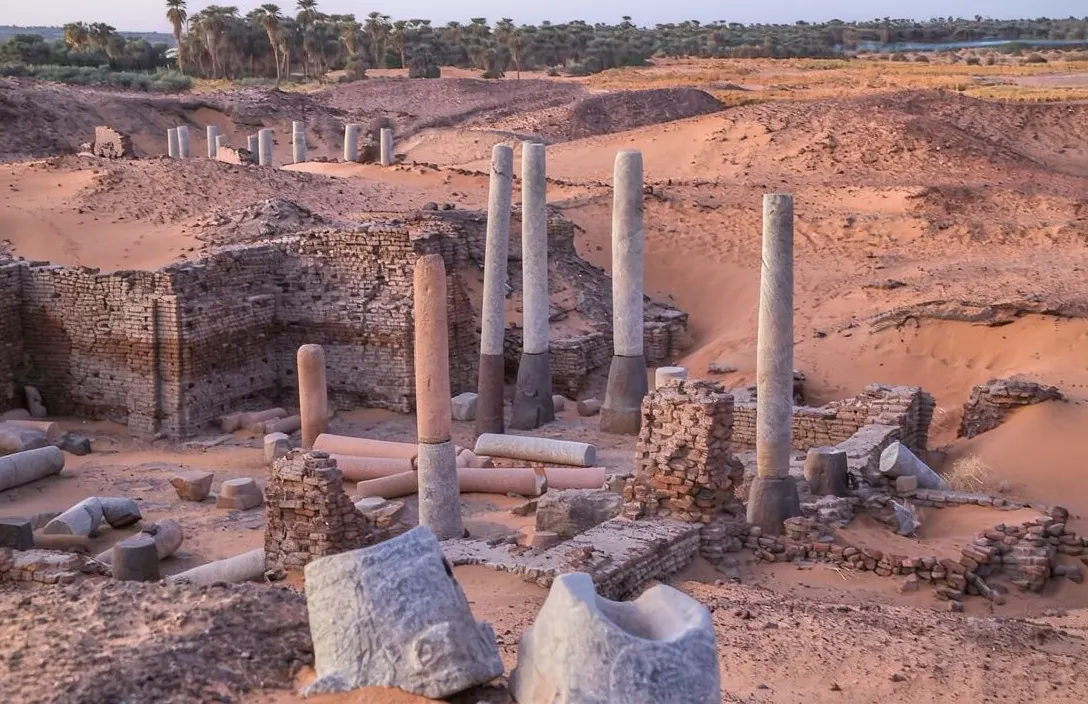

Archaeologists have unearthed the original floor of a monumental medieval cathedral in northern Sudan, revealing the scale and architectural significance of one of Nubia’s most important Christian buildings. The discovery was made in the ancient city of Old Dongola, where Polish-Sudanese archaeologists uncovered a staircase with 11-meter (36-foot) high walls that led them to the original floor level of the Great Church of Jesus (source ID: 1). [1]
The church, which could be larger than the White House, is believed to be the largest church in medieval Nubia. The discovery was made by the Sudanese-Polish archaeological mission, which has been working in the region since 2021. Much of the church remains buried, with the staircase being the only area where archaeologists managed to reach the floor (source ID: 1). [1]
Artur Obłuski, head of the Sudanese-Polish archaeological mission, described the church as the largest and most important in medieval Makuria, one of three kingdoms that emerged along the middle reaches of the Nile River following the arrival of Christian missionaries in the sixth century. The church is located on the eastern bank of the Nile, about 160 kilometers (100 miles) southeast of modern-day Dongola (source ID: 1). [1]
Obłuski compared the church to Hagia Sophia in Istanbul, stating that the Great Church of Jesus played a similar role in medieval Nubia and northeastern Africa through its spatial planning and construction techniques. Archaeologists estimated that the church measured about 47 metres (154 feet) wide and 57 metres (187 feet) long (source ID: 1). [1]
Advertisement
Archaeologists have unearthed the original floor of a monumental medieval cathedral in northern Sudan, revealing the scale and architectural significance of one of Nubia’s most important Christian buildings. The site, located in the ancient city of Old Dongola, is believed to be the largest church in medieval Nubia. The discovery was made by a Polish-Sudanese archaeological mission, which uncovered a staircase with 11-meter (36-foot) high walls that led to the original floor level of the Great Church of Jesus (source ID: 1). [1]
The church was first found in 2021, but much of it remains buried, with the staircase the only area where archaeologists managed to reach the floor. Artur Obłuski, head of the Sudanese-Polish archaeological mission, described the church as the largest and most important in medieval Makuria, one of three kingdoms that emerged along the middle reaches of the Nile River following the arrival of Christian missionaries in the sixth century (source ID: 1). [1]
Obłuski compared the church to Hagia Sophia in Istanbul, noting that the Great Church of Jesus played a similar role in medieval Nubia and northeastern Africa through its spatial planning and construction techniques. He said that the church measured about 47 metres (154 feet) wide and 57 metres (187 feet) long (source ID: 1). [1]
Archaeologists have unearthed the original floor of a monumental medieval cathedral in northern Sudan, revealing the scale and architectural significance of one of Nubia’s most important Christian buildings. The site, located in Old Dongola, is believed to be the largest church in medieval Nubia, potentially larger than the White House. Artur Obłuski, head of the Sudanese-Polish archaeological mission, described the church as the largest and most important in medieval Makuria, one of three kingdoms that emerged along the middle reaches of the Nile River following the arrival of Christian missionaries in the sixth century. The discovery was made through the excavation of a staircase with 11-meter (36-foot) high walls that led to the original floor level of the Great Church of Jesus (source ID: 1). [1]
Advertisement
The church was first identified in 2021, but much of it remains buried, with the staircase being the only area where archaeologists managed to reach the floor. Obłuski compared the church to Hagia Sophia in Istanbul, noting that the Great Church of Jesus played a similar role in medieval Nubia and northeastern Africa through its spatial planning and construction techniques. He emphasized that the church's design and construction techniques were influential, akin to Hagia Sophia’s role in the Byzantine Empire. The church is located in Old Dongola on the eastern bank of the Nile, about 160 kilometers (100 miles) southeast of modern-day Dongola, a city known for its numerous ancient churches (source ID: 1). [1]
Archaeologists estimated that the church measured about 47 metres (154 feet) wide and 57 metres (187 feet) long. Obłuski, who is also the director of the Polish Center of Mediterranean Archaeology, stated that the discovery is significant for understanding the architectural and religious history of medieval Nubia. The excavation is ongoing, with plans to further explore the site and uncover more details about the church's construction and historical significance (source ID: 1). [1]
Archaeologists have unearthed the original floor of a monumental medieval cathedral in northern Sudan, revealing the scale and architectural significance of one of Nubia’s most important Christian buildings. The site where Polish-Sudanese archaeologists uncovered the original floor of a monumental medieval cathedral is seen in northern Sudan's ancient city of Old Dongola. This discovery has provided insight into the architectural grandeur of the Great Church of Jesus, which is believed to be the largest church in medieval Nubia. The church was first found in 2021, but much of it remains buried, with the staircase the only area where archaeologists managed to reach the floor (1). [1]
Artur Obłuski, head of the Sudanese-Polish archaeological mission, described the church as the largest and most important in medieval Makuria, one of three kingdoms that emerged along the middle reaches of the Nile River following the arrival of Christian missionaries in the sixth century. Obłuski compared the church to Hagia Sophia in Istanbul, noting that the Great Church of Jesus played a similar role in medieval Nubia and northeastern Africa through its spatial planning and construction techniques (1). [1]
Advertisement
Archaeologists estimated that the church measured about 47 metres (154 feet) wide and 57 metres (187 feet) long. The church is located in Old Dongola on the eastern bank of the Nile, about 160 kilometers (100 miles) southeast of modern-day Dongola. The city is known for its numerous ancient churches, and the discovery of this cathedral has further highlighted its historical and religious importance (1). [1]
Sources
Prepared with AI assistance from the cited sources.
The Cali Reporter newsletter
The stories worth your time.
California, the country, and what comes next. Join our free newsletter for reporting that keeps you informed.
More in West Coast
- COP31 Collapse Highlights Climate Negotiation Challenges
The collapse of COP31, the U.N. climate talks in Turkey, has underscored the difficulties in achieving global consensus on climate action, with experts emphasizing the need for reform and individual efforts moving…
- ScienceWorks Museum to Transition to Community Science Center
ScienceWorks Hands-On Museum in Ashland, Oregon, is pausing most activities and transitioning to a community science center with new resources for all ages, according to a report by Jefferson Public Radio.
- Seniors Embrace Tesla's Automated Driving Despite Safety Concerns
A growing number of older drivers are using Tesla's Full-Self Driving (Supervised) technology to maintain their independence, despite warnings from safety experts about potential risks.