

AMD Finally Overtakes Intel in Q1 Data Center Revenue as Agentic AI Forces Hyperscalers to Hoard CPUs Over GPUs
AMD just passed Intel in data-center revenue for the first time, proof that the AI boom now needs CPUs as much as it needs GPUs.
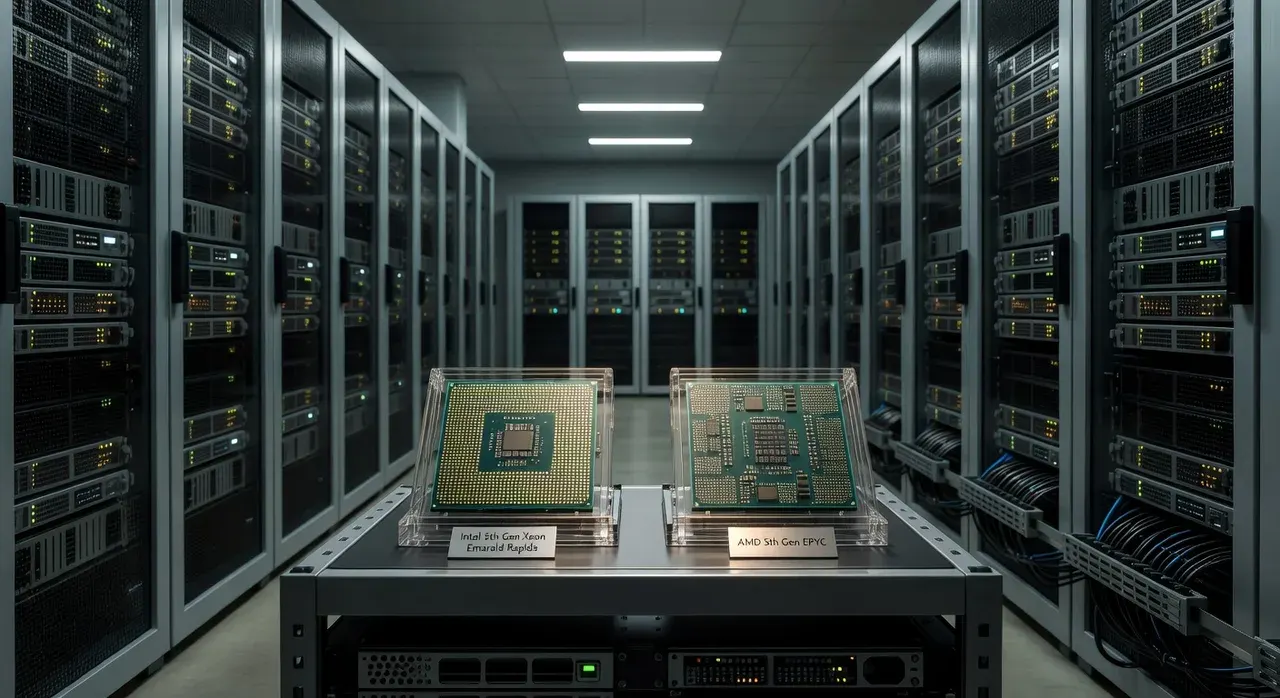
AMD’s EPYC processors have finally delivered what the company has chased for years: in the first quarter, its data-center revenue topped Intel’s for the first time. The shift, reported by DigiTimes, marks the moment when hyperscalers racing to deploy agentic AI began hoarding general-purpose CPUs instead of treating them as an afterthought behind GPUs.
The numbers tell a story of sudden reversal. AMD had already been gaining ground on Intel in data-center performance since the third quarter of 2025, but revenue leadership is new. The reason is concrete: the CPU-to-GPU ratio inside new AI clusters has collapsed from 1:8 to 1:4 and is heading toward 1:1. For every four GPUs, operators now want a dedicated CPU; soon they will want one per GPU. Inferencing workloads that once ran on accelerators have migrated back to the host processors, flipping the old hierarchy.
Supply cannot keep up. TSMC, which manufactures the majority of AMD’s chips, is constrained. AMD is therefore turning to Samsung for additional capacity. The same bottlenecks affect Intel and every other player. AI companies are not waiting; several are already designing their own custom CPUs or negotiating for extra x86 cores. The entire chain is running at full stretch, yet demand booked for the rest of the decade still exceeds what fabs can deliver.

Even as x86 vendors surge, new challengers are sharpening their knives. NVIDIA is preparing its Vera Arm-based CPU to sit alongside the Rubin GPU platform, while Groq’s LPU and Arm’s own AGI design are doubling revenue forecasts. The data-center market is no longer a two-horse race; it is becoming a multi-architecture scrum in which every vendor claims its silicon is the missing piece of the AI stack.
Both AMD and Intel have next-generation parts queued up. AMD will ship the Venice and AI-optimized Verano platforms; Intel is preparing 18A “Diamond Rapids” and the SMT-enabled Coral Rapids that follows it. Whether those parts arrive in volume before the supply crunch eases will decide who keeps the revenue crown.
The deeper irony is that the very explosion in AI training and inference that was supposed to crown the GPU age has instead revived the CPU, exposing how brittle the entire supply chain remains. Hyperscalers are not choosing between silicon types anymore; they are trying to buy every type they can get.
Original reporting: Wccftech.
More in Business
- IMF Chief Warns of Economic Divergence and Debt Risks Amid Artificial Intelligence Boom
Kristalina Georgieva suggests that while AI could significantly boost global growth, it simultaneously threatens to widen inequality and exacerbate inflationary pressures and public debt burdens.
- California Limits Utility Profits and Expands Home Energy Role
Gov. Gavin Newsom signed laws capping utility returns on lower-risk projects and accelerating virtual power plant development.
- Lyft to Pay $272.5 Million in Record California Wage-Theft Settlement
Largest such settlement in state history resolves claims that Lyft misclassified drivers as independent contractors from 2016 to 2020, denying them core wage protections.