

AI data center bans are rapidly multiplying across the US, 69 jurisdictions block new builds, with four moves noted as permanent
Local governments are quietly killing the infrastructure boom that powers AI, with 69 jurisdictions now blocking new data centers and four bans made permanent.
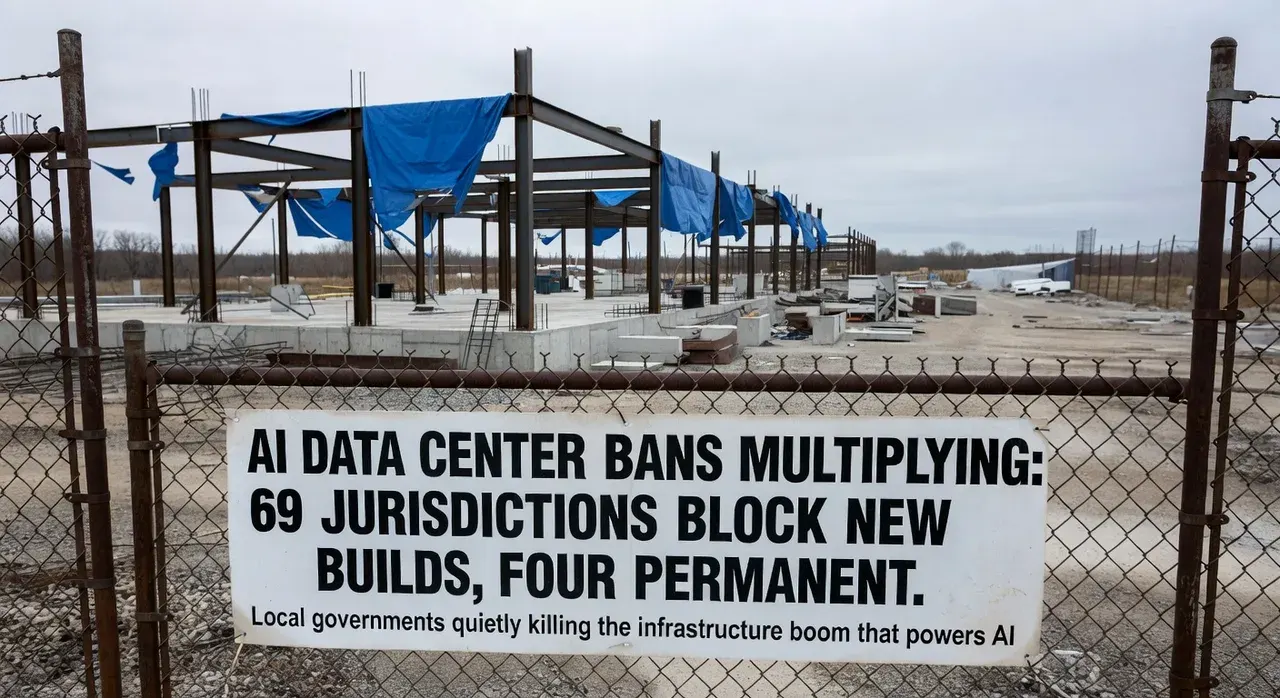
Sixty-nine jurisdictions across the United States have now blocked new data center construction, a number that keeps climbing as local officials treat the facilities powering the AI revolution like unwanted industrial waste. As of April 2026 the tally of active bans stood at 50, according to tracking that shows no sign of slowing.
What began as scattered complaints about noise, water use, and grid strain has hardened into policy. Four of those bans are explicitly permanent, locking out future investment in counties and towns that might otherwise have competed for the jobs and tax revenue these projects bring. The rest remain active restrictions that effectively function as moratoriums until political winds shift.
The pattern reveals a deeper contradiction in America’s AI ambitions. Washington and Silicon Valley talk endlessly about national competitiveness and technological supremacy, yet hyper-local vetoes are throttling the physical backbone those ambitions require. Data centers are not optional extras; they are the factories of the algorithmic age. Blocking their construction is not environmental stewardship, it is industrial self-sabotage.

Local officials rarely frame their decisions in such stark terms. They cite traffic, electricity demand, and the fear that gleaming server farms will change the character of their communities. Those concerns can be real. But multiplying outright bans instead of negotiating mitigation measures suggests a reflexive NIMBYism that treats economic growth itself as the problem.
The rapid spread of these prohibitions should alarm anyone who claims to want the United States to lead in artificial intelligence. You cannot dominate the future while systematically preventing the construction of the plants that run the models. The bans are not abstract; they are concrete barriers rising in real time across the map.
Whether lawmakers in the affected states notice the cumulative effect before the next wave of AI investment simply reroutes to friendlier countries remains the open question.
Original reporting: Slashdot.org.
More in Business
- IMF Chief Warns of Economic Divergence and Debt Risks Amid Artificial Intelligence Boom
Kristalina Georgieva suggests that while AI could significantly boost global growth, it simultaneously threatens to widen inequality and exacerbate inflationary pressures and public debt burdens.
- California Limits Utility Profits and Expands Home Energy Role
Gov. Gavin Newsom signed laws capping utility returns on lower-risk projects and accelerating virtual power plant development.
- Lyft to Pay $272.5 Million in Record California Wage-Theft Settlement
Largest such settlement in state history resolves claims that Lyft misclassified drivers as independent contractors from 2016 to 2020, denying them core wage protections.