

Pacific Northwest Wildfire Season: How 1,400 Square Miles of Smoke Blew a Hole in the Summer Tourism Economy
Officials say fall is coming. Locals say the bank account is smoldering.

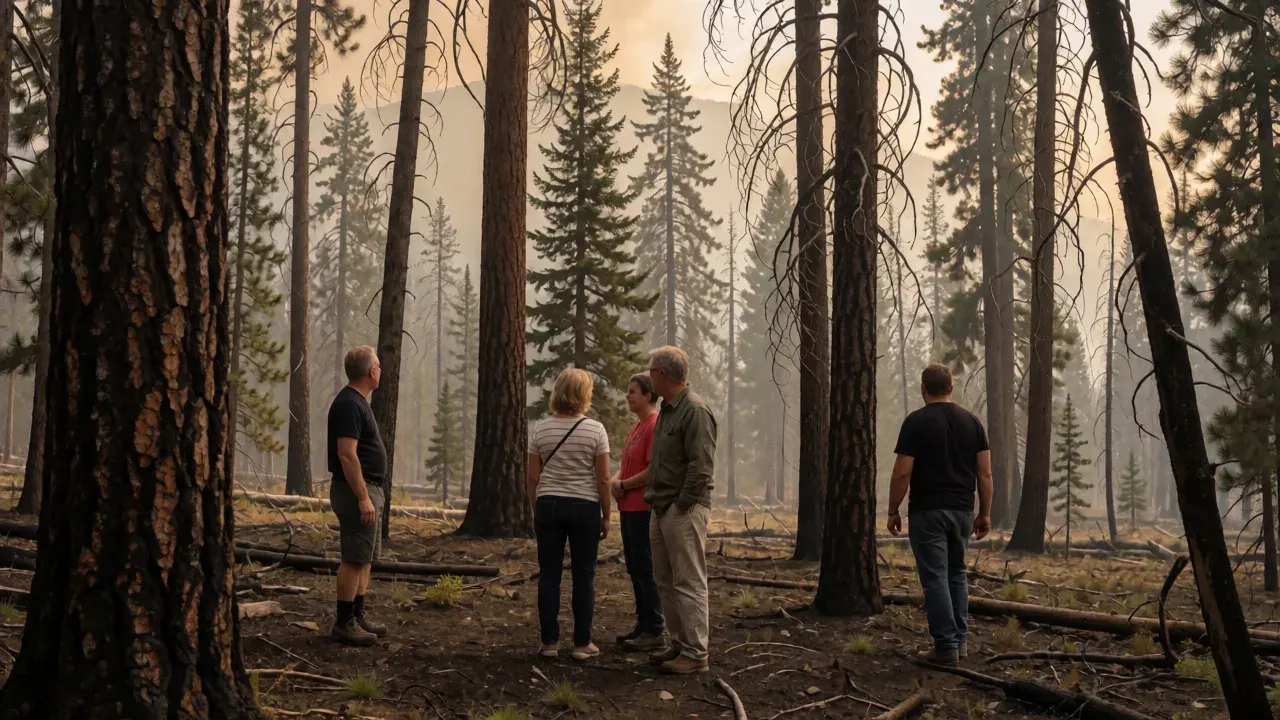
Here in the Pacific Northwest, we have a complicated relationship with our natural beauty. We love the outdoors until the outdoors decides to start choking us. The 2026 wildfire season has been less of a scenic backdrop and more of a reminder that our tourism economy is fragile, fragile, and prone to bursting into flames. The smoke has been so thick that you do not need a reservation to see the sun. You just need a cough.
Andrew Walker knows this reality better than most. He runs Ross Lake Resort, a place that sounds idyllic on paper. You get 15 floating cabins and you get there by hiking or boating. In a normal July or August, you would see crowds of campers and hikers lounging by Ross Lake inside the North Cascade mountains. This year? The number was close to zero. The lake and boat-in campgrounds were closed because the air quality was apparently considered a form of exercise.
For five years running, Walker has dealt with a wildfire during his summer operations. This year, the financial hit was significant. He said the money he makes from that group of folks completely collapsed in August with the wildfires. Several guests canceled bookings due to health concerns, which is a polite way of saying they didn't want to inhale the particulates. Seasonal businesses like Ross Lake Resort rely on summer revenue to make it through the darker, colder months. But their pockets have been stretched thin by the second worst wildfire season on record in Washington state. More than 1,400 square miles have burned across the state so far. That is an area larger than Rhode Island. You do not need a map to realize that is a lot of smoke.

The State of Washington Tourism is out there trying to sell the dream. Michelle McKenzie, the director of marketing, says a lot of destinations are beautiful in the fall. She mentions Spokane and the Green Bluff or North Central Washington and apple orchards. It is a spin strategy. Fires and other climate-related impacts have, by extension, redirected visitors’ travel plans. In August, the Border 2 fire near the Canadian border closed campsites and trails in the North Cascades. Meanwhile, the Spokane-area wildfires displaced thousands of residents and damaged over 900 structures. Businesses around Lake Chelan, a tourist destination, have reported low profits and fewer crowds since the Little Giant fire blazed through. As of late August, the fire had burned more than 230 square miles and at least 35 structures. By Tuesday, it had grown to nearly 270 square miles.
The risk of wildfires on the West Coast are further exacerbated by climate change. The Washington State Department of Ecology notes that snow melts earlier and forests stay drier for longer. Climate experts report that the fire season, which runs from about May to November, is getting more volatile and destructive. We are anticipating that this is becoming part of what we have to plan for, said Walker. We are planning for smoke. We are planning for cancelled bookings. We are planning for the aesthetic of our summer being ruined by an apocalyptic haze.
The Bavarian village in Leavenworth took a massive hit in August. Usually, this town’s second busiest month of the year behind December, foot traffic fell by 35% due to smoke. Troy Campbell, the executive director of the Leavenworth Chamber of Commerce, summed it up best. I think most destinations have seen a steady decline, but nothing like this. This is definitely climate-related. He noted that extreme weather events have threatened the town’s busiest tourist months in the past year. There was September wildfire smoke that lingered leading up to the 2025 Oktoberfest and catastrophic floods that caused power outages and damaged Highway 2 to Leavenworth last December. Leavenworth has since revamped its website to include real-time updates on travel conditions and air quality and live webcams around town. It is nice that they care about the tourists, but the tourists are already gone.
Things are starting to look up a little bit. Visitations during Labor Day weekend this year were on par with those of 2024, one of the town’s busiest years. Campbell said some hotels have reported being fully booked during all three weekends of this year’s Oktoberfest. Business in Leavenworth is largely seasonal. Unlike other tourist destinations that heavily depend on the summer months, the town hosts a series of large events during the fall and winter. There is the Autumn Leaf Festival in late September, Oktoberfest and its famous Christmastown that glows from Thanksgiving through February. Campbell said some hotels have reported being fully booked during all three weekends of this year’s Oktoberfest. We have built events and festivals throughout the year. So if we take a hit in one month, we have something to hang our hat on in the future. The progressive branding of the Pacific Northwest suggests we can have our cake and eat it too, but the reality is often about balancing the books when the weather does not cooperate.
The backpackers are the first to know when the air is bad. Kyle LaCrosse, a senior operations coordinator at the Wildland Trekking company, a backpacking and hiking tour operator headquartered in Arizona, said a number of backpackers who planned to hike Mount Rainier and the North Cascades in late July and August altered their trips to destinations farther west to get away from poor air quality. LaCrosse said he is no stranger to wildfires, but the biggest change is really the unpredictability of each season, including weather patterns. This season, he had to reroute eight backpacking trips, or roughly 100 guests, to places such as Olympic National Park. Intrepid Travel, a tour operator that partners with organizations including Wildland Trekking, reported in August that the 2026 wildfire season had impacted about 2,000 of its travelers. Historically, if a trail is open, you look at that and you say, OK, we can do this. But nowadays, we really have to look at multiple different aspects of it, AQI (air quality index), where the fires are at. You cannot just show up and hope for the best anymore.
Towns in Central Washington likewise have to grapple with unpredictable fire seasons, which have torched their most lucrative months. In Chelan, most businesses have a scant 85 days a year to make money. They operate in the red for a good portion of the year, said Anthony Anton, the president and CEO of the Washington Hospitality Association. This August, the hotel occupancy rate in Chelan County was 73.1%, compared with 78% in August 2025. Revenue per available room in August was down 13.4% (not adjusted for inflation), compared with a year ago. Tom Campbell, vice president and co-owner of Campbell's Resort on Lake Chelan, experienced that firsthand. The Little Giant fire burned about 40 miles from his resort, resulting in the business seeing its August occupancy rates cut in half. With empty guest rooms and clouds of smoke shrouding the skies, the resort felt like an eerie ghost town.
When these folks are canceling their reservation or looking to cancel their vacation with us, that is a week or 10 days in some cases that these folks won't be here to enjoy the lake and support the Chelan retail economy, Campbell said. He feels fortunate the resort has a conference center to fall back on for income, but hopes more tourists will visit Lake Chelan in the coming months. Sunny days and blue skies returned this September. But Campbell is realistic. He says you can never get August back. Those summer vacation days with all the families here, when the kids are out of school, you just never get those days back. It is unfortunate that an entire month gets erased from the ledger. The loss of revenue is not just a line item; it is the difference between a business surviving the winter and having to close its doors for good.
The gap between the progressive branding of the Pacific Northwest as a pristine, sustainable paradise and the reality of a climate-changed landscape is widening. We are seeing the cracks in the system. The smoke does not discriminate between the seasonal visitor and the local resident, but the economic impact certainly does. The hope for a good fall is a common refrain among officials and business owners. They are pointing to the apple orchards and the changing leaves, trying to convince the world to come back before the snow flies. But the memory of August is fresh. The loss of revenue is calculated. And the reality of living next to a fire zone is accepted as a new normal. Fall is coming, but the scars of summer are sticking around.
First reported by Chronline.
More in West Coast
- Portland Public Schools Faces Intense Opposition Over Proposed Facility Closures
Community members, educators, and board members expressed significant frustration during a recent meeting regarding a plan to consolidate buildings and programs to address declining enrollment.
- Portland’s Bike Buses Offer Relief from I-5 Disruptions
Weekly group bike rides, expanded during the I-5 southbound closure, are drawing commuters seeking community, safety and a more enjoyable alternative to gridlock.
- Why You Might Not Need Cable to See the Washington Huskies Smash the Minnesota Gophers This Saturday Night
Seattle hosts the Huskies in a Big Ten matchup you can stream on FOX for free this weekend.