

30% vs 14%: Shocking New Data Shows Radiotherapy Cuts High-Risk Brain Tumor Recurrence by More Than Half
Vienna study reveals adjuvant radiotherapy offers significant survival benefits for specific tumor types

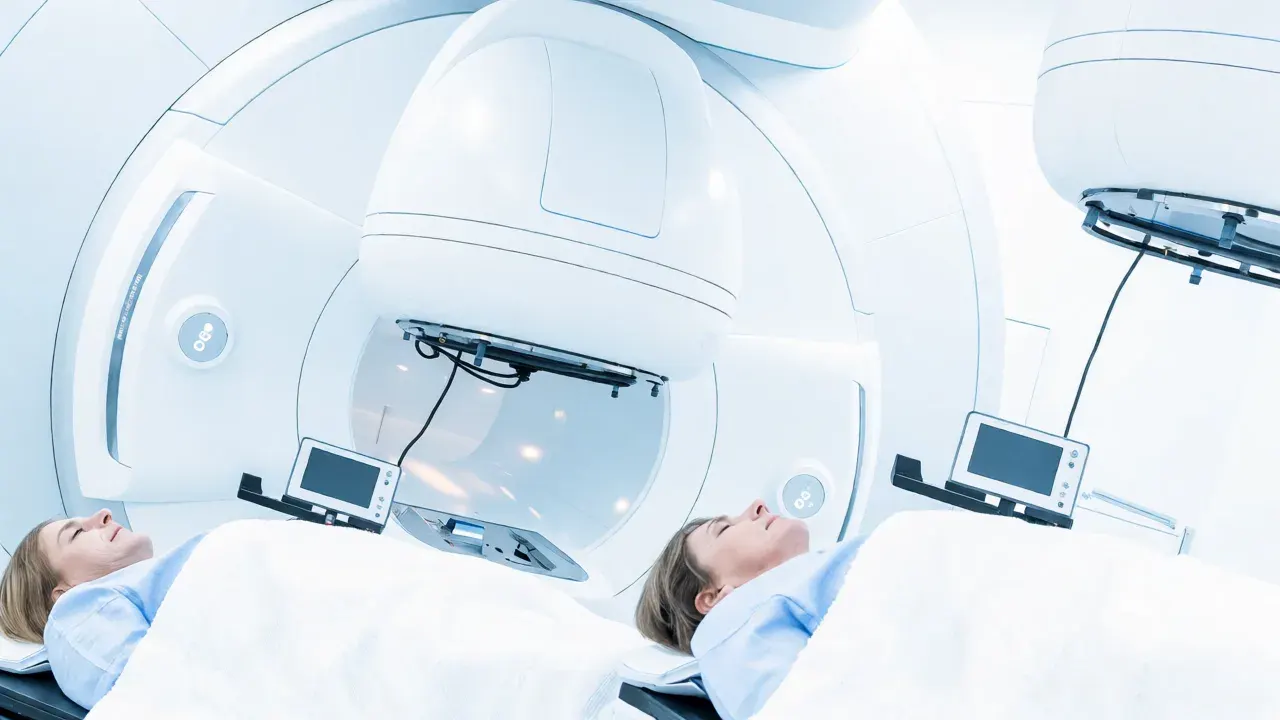
Atypical meningiomas present a distinct clinical challenge. These tumors originate in the meninges, which are the protective membranes surrounding the brain and spinal cord. While they are not always classified as highly aggressive, they carry a significant risk of recurrence after surgical intervention. For patients navigating a diagnosis, the fear of a return is a genuine source of anxiety. An international study led by the Medical University of Vienna has now provided the most robust evidence to date regarding how to manage this risk. published recently in The Lancet, this work could fundamentally change clinical guidelines.
The study, known as ROAM/EORTC-1308, represents a massive collaborative effort. It was conducted across 58 hospitals in 11 different countries. These nations included Austria, Australia, Belgium, Ireland, France, Germany, New Zealand, Italy, Spain, Switzerland, and the United Kingdom. The scope is impressive. The trial included 157 patients who had undergone complete surgical removal of an atypical meningioma. To ensure the validity of the results, the patients were randomized into two distinct groups. This design is the gold standard for clinical research because it minimizes bias. One group of 78 patients received postoperative radiotherapy consisting of 30 sessions. The other group of 79 patients was closely monitored through regular imaging without immediate additional treatment.
The data regarding disease-free survival offers the clearest picture of the treatment's impact. After a median follow-up period of around five years, the results were statistically significant. In the observation group, 24 of the 79 patients experienced a recurrence of the meningioma. That is approximately 30 percent of the group. Conversely, in the radiotherapy group, only 11 of the 78 patients saw the tumor return. This indicates a recurrence rate of about 14 percent. This difference represents a substantial reduction in the risk of the tumor coming back.

When we look at the absolute risk reduction, the number is clinically profound. The study found that at the five-year mark, 79.9 percent of patients in the radiotherapy group remained recurrence-free. In comparison, only 64.3 percent of those in the surveillance group enjoyed the same outcome. This gap in survival rates is vital information for any patient weighing their treatment options. The lead author of the study, Matthias Preusser, emphasized the importance of these findings. He noted that the ROAM/EORTC-1308 trial provides the first evidence from a randomized controlled trial regarding the benefits of adjuvant radiotherapy. The findings are set to be incorporated into national and international guidelines soon.
Several researchers led this international effort, including Matthias Preusser from the Division of Oncology at the Department of Medicine I at MedUni Vienna. He worked alongside Michael Jenkinson from the Liverpool Clinical Trials Centre in the UK. Carrol Gamble also from Liverpool Clinical Trials Centre, and Damien C. Weber from the Paul Scherrer Institute and Inselspital, University Hospital of Bern in Switzerland. Their collective work provides a comprehensive answer to a question that has perplexed the medical community for some time. The decision to proceed with radiotherapy must always be a shared decision between a physician and the patient. The study authors emphasize that while the benefits are clear, one must consider possible side effects and long-term consequences. However, the data suggests that serious radiation-related events were rare during the course of the trial.
Meningiomas actually account for around one-third of primary brain tumors in adults. This prevalence makes the management of atypical variants a critical public health concern. By utilizing a Phase 3, open-label, randomized controlled trial design, the researchers ensured that the results are generalizable to the broader population. They specifically looked at patients with WHO grade 2 atypical meningiomas. These are tumors that are more biologically aggressive than the common, benign types. The study concludes that adjuvant radiotherapy after complete surgical resection significantly reduces the risk of recurrence. Furthermore, future studies will explore whether the survival benefits extend beyond the five-year mark. This research marks a pivotal step forward in the oncological care of patients with brain tumors.
First reported by Medical Xpress.
More in Health & Nutrition
- Long-term opioid use fails to alleviate chronic back pain, Northwestern University study suggests
Researchers identified distinct brain activity patterns and molecular markers that may guide future treatments for pain management and opioid tapering.
- Human tau seeds trigger disease-specific shapes in mouse brains, new study finds
Study in Nature shows that injectable human tau aggregates from Alzheimer’s and corticobasal degeneration template their 3D folds onto mouse tau, supporting the prion-like seeding model.
- Menopause Largely Missing from Electronic Health Records Despite Its Health Impact
study of nearly 240,000 women finds only 12% of electronic records include menopause status, even though over half reported being in transition.