

242 Children's Eyes Reveal Surprising Early Depression Warning Signs
Binghamton study tracks eye movements to predict early depression risks.

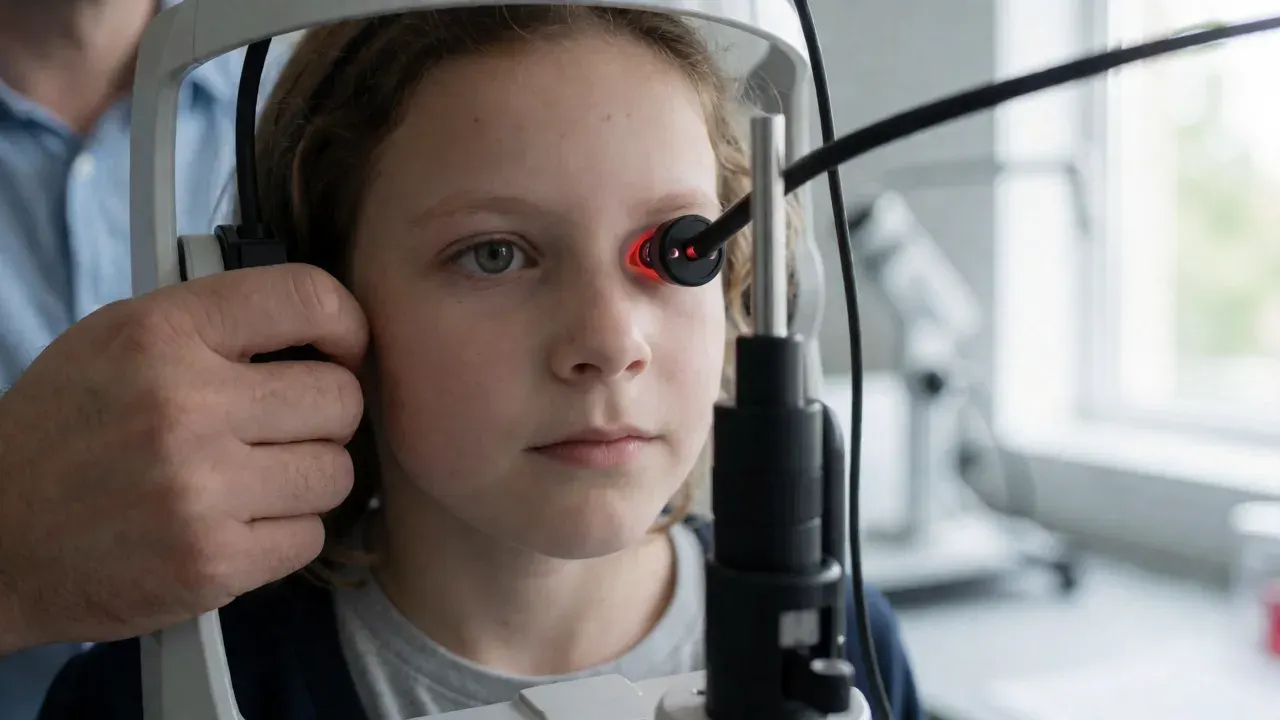
We all worry about our kids. We check their temperature. We look at their grades. But sometimes the answers are hiding in plain sight. A new study from Binghamton University suggests there might be a quiet clue to depression hidden in a child's eyes. The researchers at the Mood Disorders Institute decided to look at how children process emotional information. They found that depression can actually influence how kids look at happy and sad expressions. This is important because it moves the conversation from feelings to observable behaviors.
Brandon Gibb is the director of the Mood Disorders Institute. He is also a SUNY distinguished professor of psychology. He and his team believe that catching vulnerabilities early is crucial. 'Most of the vulnerabilities that we focus on are still developing during this time period,' Gibb said. 'You can catch things as they're developing, rather than only studying them once they're already there and pretty stable.' This approach is about prevention. It is about seeing the signs before they become a full-blown issue. The team is investigating how family history and emotional experiences contribute to future risk.
The study is not just a theory. It is based on hard data collected over years. The research team, including lead author Kelly Gair and collaborator Leslie A. Brick from the University of New Mexico, followed 242 children and their mothers for two years. This is a significant commitment to science. Every six months, the participants returned for assessments. During each visit, the children viewed pairs of faces on a screen. One face displayed a neutral expression while the other showed an emotional expression like happy, sad, or angry. They used eye tracking technology to measure where the children focused their attention. This method allows researchers to see exactly how depression influences visual attention.

The researchers looked at the 'transactional relations' between attention and depression. This means they tracked how these two factors influence each other over time. Earlier research had linked depression to greater attention toward sad facial expressions. However, researchers were unsure if this attention was a cause or a result of the depression. This new study is the first to examine how depressive symptoms and attention biases might influence one another. 'The real novel piece is that we looked at these transactional relations,' Gair said. They examined how attentional biases and depressive symptoms mutually predicted one another across time points.
The findings showed that the relationship between depression and attention depends heavily on family background. For children whose mothers had a history of major depressive disorder, the results were stark. As the children's depressive symptoms increased, their attention to sad faces also increased. 'For those who are already at risk, the more these children experience depression themselves, the more they lose their ability to pull their attention away from the sad things around them,' Gibb explained. It seems that for these children, sad expressions become overwhelmingly salient. The environment feels darker and more focused on negative information.
However, the pattern was different for lower-risk children. These children did not have the same family history of depression. When they experienced increases in depressive symptoms, they tended to spend less time paying attention to happy faces. 'In our lower-risk children, what seems to be happening is that experiences of depression are eroding a protective factor, which is how much they pay attention to happy faces,' Gibb noted. It is a slow erosion of joy. As the study continues, the team hopes to follow these children as they move into adolescence. They want to determine if these eye patterns contribute to a higher likelihood of developing clinical depression later in life. The study was published in the Journal of Psychopathology and Clinical Science.
First reported by ScienceDaily: Relationships.
More in Love & Relationships
- Clear requests and respectful boundaries belong in everyday relationships
NIH guidance highlights honest conversation, listening and limits as parts of supportive connections.
- How Eye-Tracking Revealed Hidden Social Skills in Severely Disabled Youth
A new study finds that personalized training can unlock social abilities in people often considered untestable.
- Sleep matters: Duration, timing, quality and more may affect cardiovascular disease risk
Healthy sleep includes multiple components, such as number of hours of sleep per night, how long it takes to fall asleep, daytime functionin