

20 Years of Gorilla Data Reveals The Surprising Dark Side of Close Ties
The science of 164 wild mountain gorillas suggests friendship is complicated.

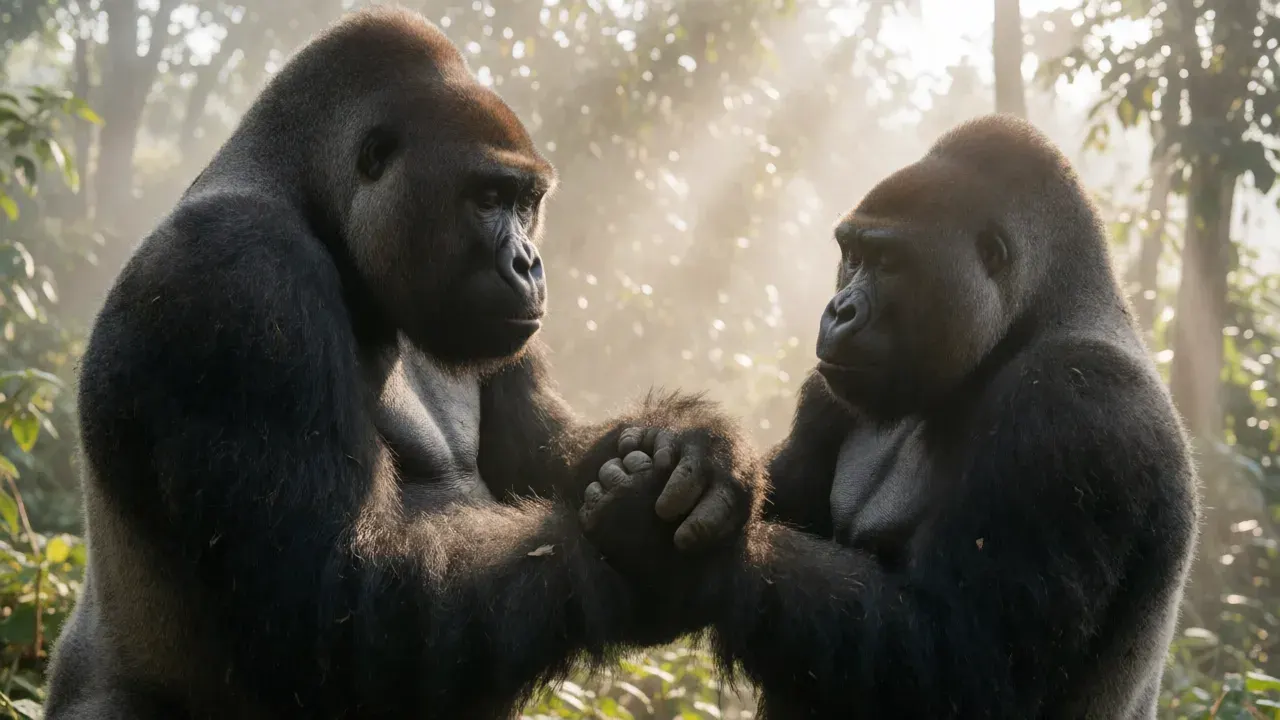
We all crave connection, yet we also know the exhaustion that comes with maintaining it. It is a truth that sits heavy in the chest. You know the feeling. You have a dinner party you don't want to attend. You have a text you dread sending. You wonder if you are doing this social thing right. It turns out you are not alone in this feeling. A fascinating new study involving 164 wild mountain gorillas offers a profound look into the push and pull of human relationships.
The researchers did not just look at a snapshot in time. They examined data collected over a span of 20 years. This long-term study was conducted by the Dian Fossey Gorilla Fund and the universities of Exeter and Zurich. Their subjects were the mountain gorillas living in Volcanoes National Park in Rwanda. This park is a place where conservation history and natural drama intertwine. The study focused on how the social lives of these gorillas affected their actual health. The results were surprising and complicated. The findings suggest that having strong social bonds is rarely a simple case of good versus bad.
The costs and benefits of friendship changed depending on the size of the gorilla groups. They even differed for males and females. We see this tension play out in our own lives. Sometimes being part of a group protects us. Other times, it exposes us to risk. For the female gorillas, the dynamic was complex. Friendly females in small groups did not get ill very often. However, they tended to have fewer offspring. In contrast, friendly females in large groups tended to get ill more often. But they also had higher birth rates. It seems that size of the group changes the very calculus of survival.

Then there are the males. The study found that males with strong social bonds tended to get ill more frequently. This might sound counterintuitive. We often think closeness equals safety. Yet, for these males, strong ties came with a specific cost. They were less likely to be injured in fights. The stress of defending females and offspring may have compromised their immune function. It is a reminder that love can be exhausting work. Dr Robin Morrison, lead author on the paper and Senior Researcher at the University of Zurich, explained this nuance.
"Having a lot of strong social relationships is often really good -- but sometimes it isn't," Dr Morrison said. He noted that strong and stable social bonds are generally linked to less illness in female gorillas. However, the picture shifts when you look at males. He did not pretend to know every reason for this difference. He suggested that males expend more energy by having close social ties. They must defend their group members. This physical and emotional load might reduce their immune function. We see echoes of this in our own relationships. The effort required to care for people can sometimes make us feel vulnerable.
The study also highlighted that the 'optimal' social type depends on an individual's sex, age, and offspring. Dr Sam Ellis from the University of Exeter described the forces at play. "With these forces pushing in different directions," he said, "the 'optimal' social type will depend on an individual's sex, age, offspring and wider social group." In humans and other social mammals, the social environment is one of the strongest predictors of health and lifespan. Yet, this study shows this is not a straightforward case.
Dr Tara Stoinski, CEO and Chief Scientific Officer of the Dian Fossey Gorilla Fund, emphasized the value of this research. She noted that the paper highlights the incredible value of long-term studies to furthering our understanding of the evolution of sociality. It shows that the benefits or costs of sociality can vary considerably across different environments. This research helps explain why such a wide range of traits have evolved in social animals, including humans. We are complex creatures.
The study offers a window into specific lives that defy easy categorization. Consider Gutangara. She is an adult female who lives in one of the largest gorilla groups. She has good relationships with many gorillas. However, she spends most of her time with her offspring. Some of these offspring are still young while others are already adults. Despite the risks of a large group, she is the most successful gorilla mother the researchers have seen. She has eight surviving offspring. Her story is a testament to the messy, beautiful calculus of motherhood.
Maggie tells another kind of story. She was the highest-ranking female gorilla in the Bwenge group. She was also one of the most frequently aggressive group members. Yet, she was also quick to provide friendly support such as grooming. She often led group interactions and acted as a protector. This role is usually taken by males. When the dominant male died unexpectedly, Maggie took charge. She guided the group until they merged with a neighbouring group. However, Maggie struggled to fit into this new group. Eventually, she chose to leave. She travelled alone for a month until she crossed into Congo. There, her trail was lost. Her story reminds us that sometimes the social contract we sign is not sustainable.
Then there is Titus. He was a "silverback" adult male mountain gorilla. His childhood was difficult. He lost his father and many other group members to poachers. His mother died when he was only four. These losses are profound. He became the dominant male of his group at the early age of 15. Titus had an unusual leadership style. He was exceptionally gentle and calm. His closest relationships were with the females in his group. They often stayed in physical contact with him. This is something rarely observed to this extent in other groups. His gentle nature made him very attractive to females. It contributed to his 20-year tenure as dominant male until his death in 2009. His life was a lesson in resilience and kindness.
Cantsbee is another silverback who led for a long time. He led his group for 22 years, which is the longest dominance tenure ever recorded. He fathered at least 28 offspring. He was known for his authoritative but peaceful nature. He rarely initiated or entered fights. He was quick to protect others and resolve conflicts in the group. He had a particularly close relationship with his son Gicurasi. Gicurasi's mother left when he was young. Cantsbee stepped in. Gicurasi eventually took over leadership of the group in Cantsbee's final years. When Cantsbee later became ill, he chose to leave the group. He spent his final months alone, except for one brief visit to the group shortly before his death. His final choice speaks volumes about dignity and the cost of leadership.
We watch these mountain gorillas and see our own struggles reflected back. The social environment is a powerful force. It predicts our health and our lifespan in ways we are only just beginning to understand. But this study shows that it is not a simple equation. There are no easy answers here. We must accept that social traits we have previously thought of as maladaptive can have important benefits. We must accept that sometimes the best social type for an individual is the one that fits them exactly. It is a messy, complicated, and deeply human reality.
First reported by ScienceDaily: Relationships.
More in Love & Relationships
- Clear requests and respectful boundaries belong in everyday relationships
NIH guidance highlights honest conversation, listening and limits as parts of supportive connections.
- How Eye-Tracking Revealed Hidden Social Skills in Severely Disabled Youth
A new study finds that personalized training can unlock social abilities in people often considered untestable.
- Sleep matters: Duration, timing, quality and more may affect cardiovascular disease risk
Healthy sleep includes multiple components, such as number of hours of sleep per night, how long it takes to fall asleep, daytime functionin