2,000-Year-Old Bog Body's Death Investigated in Northern Ireland
A coroner's investigation has been held to determine the circumstances surrounding the death of a 2,000-year-old Iron Age woman discovered in Northern Ireland, marking a first-of-its-kind effort in the region.

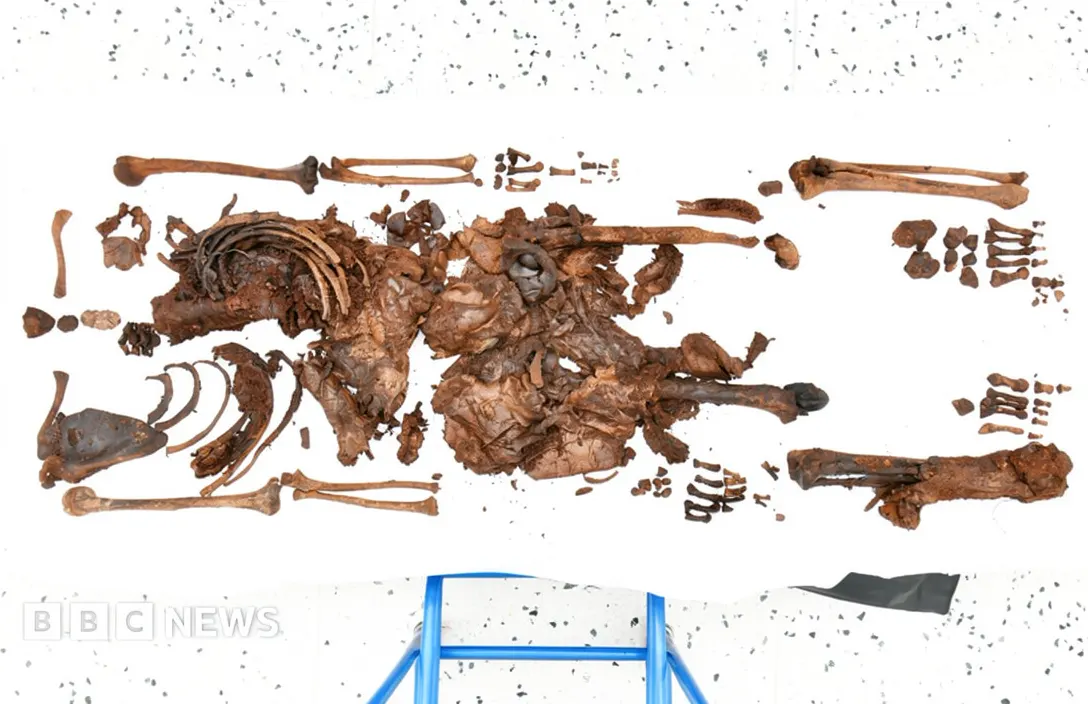

The remains of a young woman, known as the Ballymacombs More Woman, were unearthed in 2023 near Bellaghy, County Londonderry, and led to an unprecedented coroner's investigation in Northern Ireland. The coroner's inquiry, held at the Ulster Museum in Belfast, aimed to determine who the woman was, when she died, where she died, and how she came by her death. The investigation concluded that she was between 15 to 22 years old at the time of her death and that she suffered a deliberate decapitation, most likely inflicted from behind with a bladed weapon (source ID 1). [1]
The discovery of the remains marked an important moment for archaeologists, as finds of this nature involving women are incredibly rare. Hannah Crowdy, head of curatorial at National Museums NI, stated that the woman is the first of her kind in Northern Ireland and that such discoveries help piece together a mysterious part of history. The coroner's investigation brought together archaeological and scientific research to establish insights into the woman's life, including her diet, health, and the world she lived in (source ID 1). [1]
Examination of the remains and other artefacts found with her revealed cut marks on her neck, indicating she was intentionally decapitated in the bog. No skull was recovered during further investigation. Niamh Baker, the museum's curator of archaeology, suggested that the woman may have been part of a ritualistic killing or sacrifice, similar to other Iron Age remains found in north-west Europe. The exact reason behind her death remains a mystery, but the coroner's investigation provided some clarity on the circumstances surrounding her life and death (source ID 1). [1]
The remains of a young woman, known as the Ballymacombs More Woman, were unearthed in 2023 near Bellaghy, County Londonderry, and led to an unprecedented coroner's investigation in Northern Ireland. The discovery marked an important moment for archaeologists, as finds of this nature involving women are incredibly rare. According to Hannah Crowdy, head of curatorial at National Museums NI (NMNI), this is the first of its kind in Northern Ireland, and it helps piece together a part of history that is quite mysterious (1). [1]
Advertisement
Examination of the remains and other artefacts found with her revealed cut marks on her neck, indicating she was intentionally decapitated in the bog. Niamh Baker, the museum's curator of archaeology, said an osteoarchaeologist assessed the remains and found evidence suggesting she was decapitated with a bladed weapon. No skull was recovered with further investigation (1). [1]
The remains of the Ballymacombs More Woman, unearthed in 2023 near Bellaghy, County Londonderry, led to an unprecedented coroner's investigation in Northern Ireland (1). The investigation, held at the Ulster Museum in Belfast, aimed to determine the identity and cause of death of the young woman, who was between 15 to 22 years old at the time of her death (1). The coroner's inquiry marked a significant moment in archaeological and forensic research, as it was the first of its kind in Northern Ireland to investigate the cause of death of an ancient individual (1). [1]
Examination of the remains and other artefacts found with her revealed cut marks on her neck, indicating she was intentionally decapitated in the bog (1). Osteoarchaeological analysis confirmed that the decapitation was likely inflicted from behind with a bladed weapon, and no skull was recovered during further investigation (1). The coroner's investigation brought together archaeological and scientific research to piece together the woman's story, including insights into her diet, health, and the world in which she lived (1). [1]
The coroner, Joe McCrisken, emphasized the importance of addressing the four traditional questions of an inquest: who was the deceased, when she died, where she died, and how she came by her death (1). While the investigation provided some clarity, the exact circumstances of her life and death remain shrouded in mystery (1). The coroner's inquiry was seen as a way to honor the woman's story and bring it to the forefront, reflecting a unique approach to understanding ancient history through legal and forensic methods (1). [1]
Advertisement
The remains of the Ballymacombs More Woman, unearthed in 2023 near Bellaghy, County Londonderry, led to an unprecedented coroner's investigation in Northern Ireland (1). The discovery marked an important moment for archaeologists, as finds of this nature involving women are incredibly rare (1). Examination of the remains and other artefacts found with her revealed cut marks on her neck, indicating she was intentionally decapitated in the bog (1). [1]
The coroner, Joe McCrisken, emphasized the importance of addressing the four traditional questions of an inquest: who was the deceased, when she died, where she died, and how she came by her death (1). The investigation brought together archaeological and scientific research that has been carried out since the Ballymacombs More Woman was unearthed (1). [1]
Examination of her remains and other artefacts found near or with her also provided important insights into her diet, health, appearance and the world in which she lived (1). It is impossible to know the exact circumstances of her life and death but evidence suggests her death may have been part of a ritualistic killing or sacrifice (1). [1]
Sources
Prepared with AI assistance from the cited sources.
The Cali Reporter newsletter
The stories worth your time.
California, the country, and what comes next. Join our free newsletter for reporting that keeps you informed.
More in World
- Irish Man Charged with Destroying U.S. Military Aircraft at Shannon Airport
A man from Ireland has been indicted for allegedly destroying a U.S. military aircraft at Shannon Airport, according to prosecutors in New York.
- Trump's APEC Summit and Strategic Meetings
President Donald Trump is set to attend the APEC summit in Shenzhen, China, where he is expected to meet with Chinese President Xi Jinping and participate in a trilateral meeting with Russian President Vladimir Putin,…
- Early Snowfall in Northern England and Scotland
Snowfall occurred in parts of Northern England and southern Scotland, with subsequent melting due to milder temperatures, according to the BBC.